 Chinagama
Premium Core Product Matrix
Engineered with professional-grade ceramic mechanisms and high-end materials tailored for commercial distribution, catering to the specific demands of Mali's top-tier culinary and import markets.




Mali Commercial & Culinary Landscape
An Analytical Assessment of Sub-Saharan Market Opportunities and Product Evolution
Mali's economic landscape, particularly within commercial centers such as Bamako, Sikasso, and Kayes, is undergoing a profound structural transition. As modern retail infrastructures, international hotel groups, and culinary enterprises expand across the Sahelian zone, the demand for durable, professional-grade kitchenware has accelerated exponentially. Historically, traditional culinary environments relied heavily on cast iron or local wooden mortars for processing native agricultural commodities and essential spices like black pepper (Piper nigrum), red chili, and diverse indigenous seeds. However, the operational parameters of contemporary commercial kitchens, upscale hospitality venues, and urban consumer populations necessitate clean, efficient, and precise alternative solutions.
The sub-Saharan climate introduces unique challenges for standard consumer hardware. High ambient temperatures paired with seasonal variations in humidity require kitchen implements that possess exceptional resistance to oxidation, mechanical fatigue, and biological degradation. Traditional materials frequently face issues with mold accumulation or structural deterioration over extended periods of usage. Marine-grade and premium food-grade stainless steel variants, specifically AISI 304, provide an ideal answer. These alloys demonstrate complete chemical inertness when in contact with acidic food components and essential oils released during grinding, ensuring long-term product safety and compliance with international hygienic standards.

Hospitality Sector Scaling
The continuous growth of luxury business hospitality in Bamako demands sophisticated table service aesthetics. Custom gold and mirror-polished stainless steel mills offer structural durability and elegant design, satisfying the rigid operational requirements of multi-national hotel operations.
Agricultural Processing
As local Malian agricultural enterprises shift towards packaging premium, origin-specific whole peppercorns and specialty salts for domestic distribution and export, our factory-calibrated bulk grinding units provide an integrated retail mechanism that adds substantial market value to end products.
Regional Import Hubs
Importers based in Mali regularly supply goods across landlocked cross-border corridors into neighboring territories. Investing in resilient, high-volume products guarantees low defective rates during rugged transit, optimizing wholesale profitability margins.
Engineering Architecture & Technical Roadmap
Uncompromising Mechanical Standards Behind High-Performance Grinding Instruments
27+
Years Engineering R&D
300+
Global Patents Secured
12M+
Units Manufactured Annually
150+
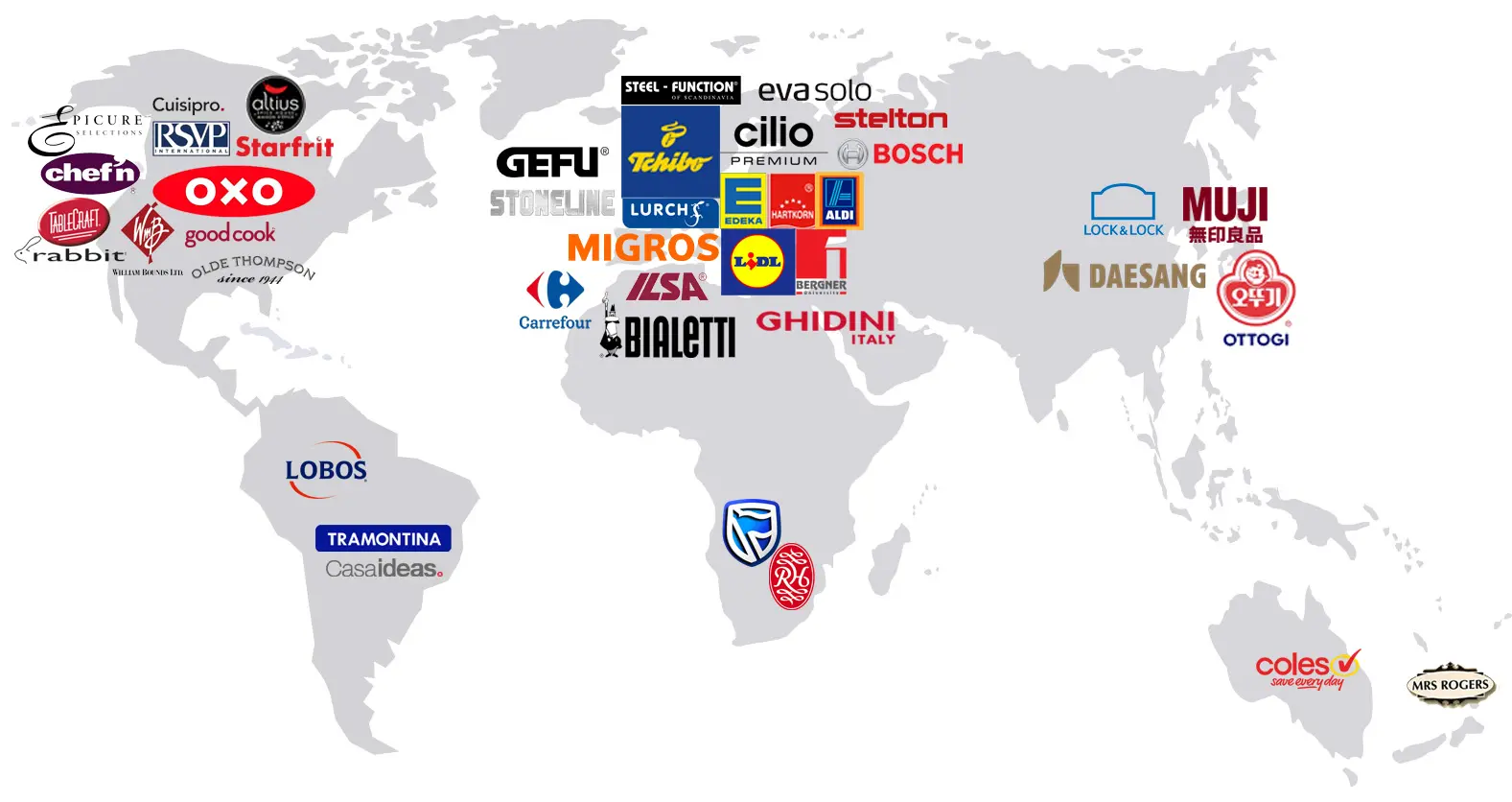
Enterprise Brand Partners
100%
Food-Grade Certified
The Mechanics of Precision: Alumina Ceramic Cores
At the center of Chinagama’s technological superiority is our advanced grinding core architecture. Unlike standard carbon steel mechanisms that dull rapidly or zinc-alloy configurations subject to microscopic metal shearing, our systems utilize high-density Alumina (Al₂O₃) ceramic burrs. This ceramic material is fired at temperatures exceeding 1,600°C, yielding an ultra-hard matrix that ranks just below diamond on the Mohs hardness scale.
For Malian B2B procurement, this delivers two distinct technical advantages:
- Complete Structural Inertness: The ceramic burr will never rust, degrade, or react chemically with moisture or highly corrosive mineral salts, preserving pure flavor profiles across decades of operation.
- Stepless Micro-Adjustment: Multi-stage internal tension springs allow users to seamlessly transition from fine powders to coarse cracks without compromising internal component alignment.
The external casing is composed of cold-rolled austenitic stainless steel. This ensures unparalleled resistance against impact forces, heavy physical use, and localized stress cracking—vital for busy commercial food processing lines and wholesale logistics chains.
Future Technology Integration Roadmap
Phase 1: Advanced Ergonomics & Sustainable Structural Matrix (Current Deployment)
Implementing modular construction designs allowing complete disassemble-and-clean cycles without tools. Incorporating premium sustainable components including certified harvested bamboo and recycled structural polymers alongside food-safe alloys to comply with emerging environmental procurement standards.
Phase 2: Digital Smart Dosing & Gravity-Activation (Mid-Term Evolution)
Integration of high-efficiency lithium-ion battery arrays with micro-USB/Type-C universal charging protocols. Incorporating gyroscopic gravity-switch sensors that trigger electric torque drive motors upon inversion, coupled with precise LED luminescence arrays targeting the food contact surface.
Phase 3: Material Science Innovation & Wear Analytics (Long-Term Horizon)
R&D testing regarding titanium-nitride (TiN) physical vapor deposition (PVD) treatment options applied to internal cutting structures, effectively doubling wear-resistance ratings and providing programmatic performance logging via low-power mesh networks for commercial kitchen asset management.
China Factory Supply Chain Resilience & Lean Efficiency
How Modern Manufacturing Frameworks Empower Global Wholesale Competitiveness
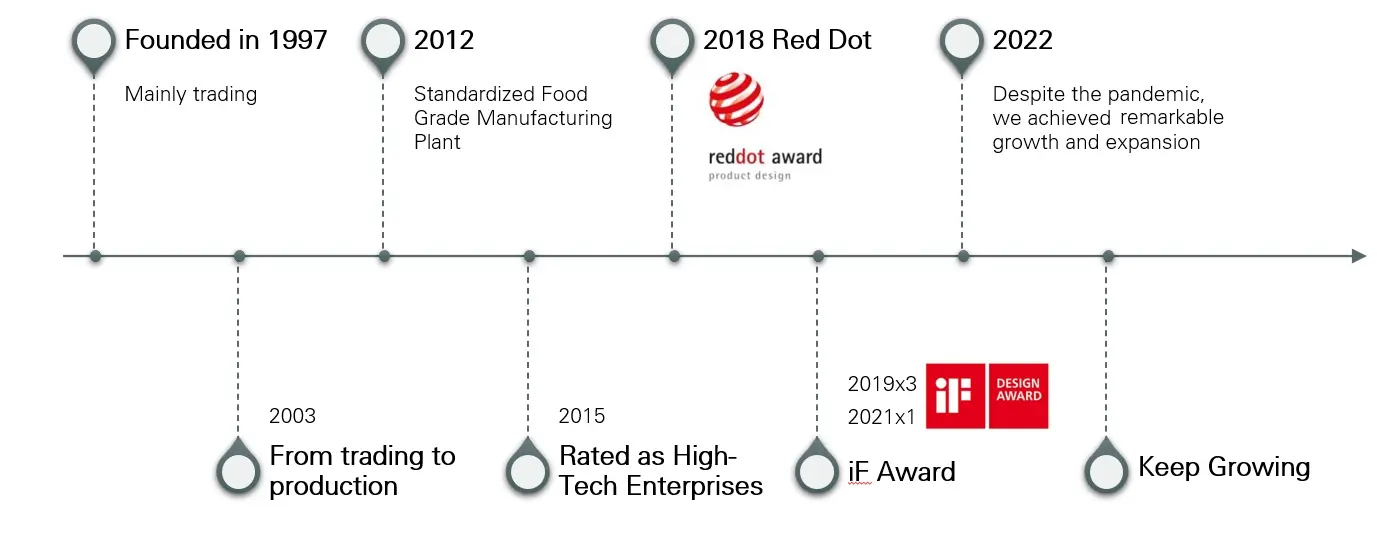
Procurement entities looking to scale distribution within Mali require a manufacturing partner capable of managing raw material pricing volatility while ensuring reliable delivery schedules. Operating from our expansive industrial footprint established in 1997, Chinagama commands a highly integrated production ecosystem that mitigates common supply chain disruptions. By localizing raw material smelting, high-speed plastic injection molding, precision CNC stamping, automated finishing lines, and advanced quality assurance testing protocols within one unified operational hub, we eliminate multi-tier contractor delays.
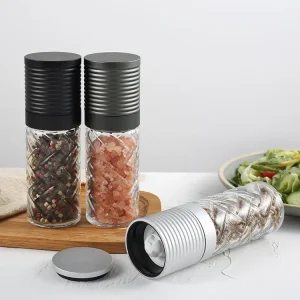
Our commitment to lean manufacturing practices allows us to offer highly competitive pricing structures for large-scale container shipments destined for West Africa. Real-time material demand forecasting coupled with automated manufacturing workflows ensures that every product—from sleek glass-bodied spice sets to solid stainless steel mills—exhibits absolute uniformity across production batches of hundreds of thousands of units.
Empirical Innovation: Award-Winning R&D Case Studies
Documented Solutions Showcasing Engineering Depth and Design Excellence
The Red Dot Award-Winning Gravity Bird-Spout Oil System
Our market intelligence identified an escalating global consumer demand for intuitive, single-handed kitchen tools that eliminate post-pour drips. In response, Chinagama’s R&D department conceptualized a gravity-activated bird-spout mechanism. The product automatically regulates fluid dispersion when tilted and self-seals when placed upright, preventing fluid residue from contaminating common surfaces. This innovation received widespread market acclaim and secured the prestigious Red Dot Design Award, illustrating our dedication to functional brilliance.
Material Science Breakthrough: Preventing Stress Fracture Dynamics
During the engineering cycle of a high-performance oil mist sprayer developed alongside a multi-national kitchenware brand, our laboratories identified structural vulnerabilities when traditional ABS and PMMA polymers came into prolonged contact with localized vegetable oils under high pressure. Over time, chemical interaction induced micro-stress fractures, leading to leakage or structural failure. Our engineers adjusted the polymer configuration, shifting the structural design to a highly resilient, non-toxic, chemical-resistant PP polymer matrix. This intervention ensured long-term durability and complete safety, expanding our client’s market capture.
Ergonomic Simplification of the Linear Spice Mill Series
Historically, the manual spice grinder segment was dominated by overly complex shapes that added unnecessary weight or focused on decorative attributes at the cost of ergonomic efficiency. Chinagama set out to revolutionize this segment by introducing a streamlined, cylindrical straight salt and pepper mill profile. By restructuring internal drive shafts and implementing proprietary technical patents, we reduced required rotational torque metrics by 35%, delivering a superior user experience for individuals of all age groups while achieving a modern, timeless aesthetic.

International Compliance & West African Logistics
Comprehensive Verification Frameworks Ensuring Seamless Cross-Border Importation
Global Standards Assurance
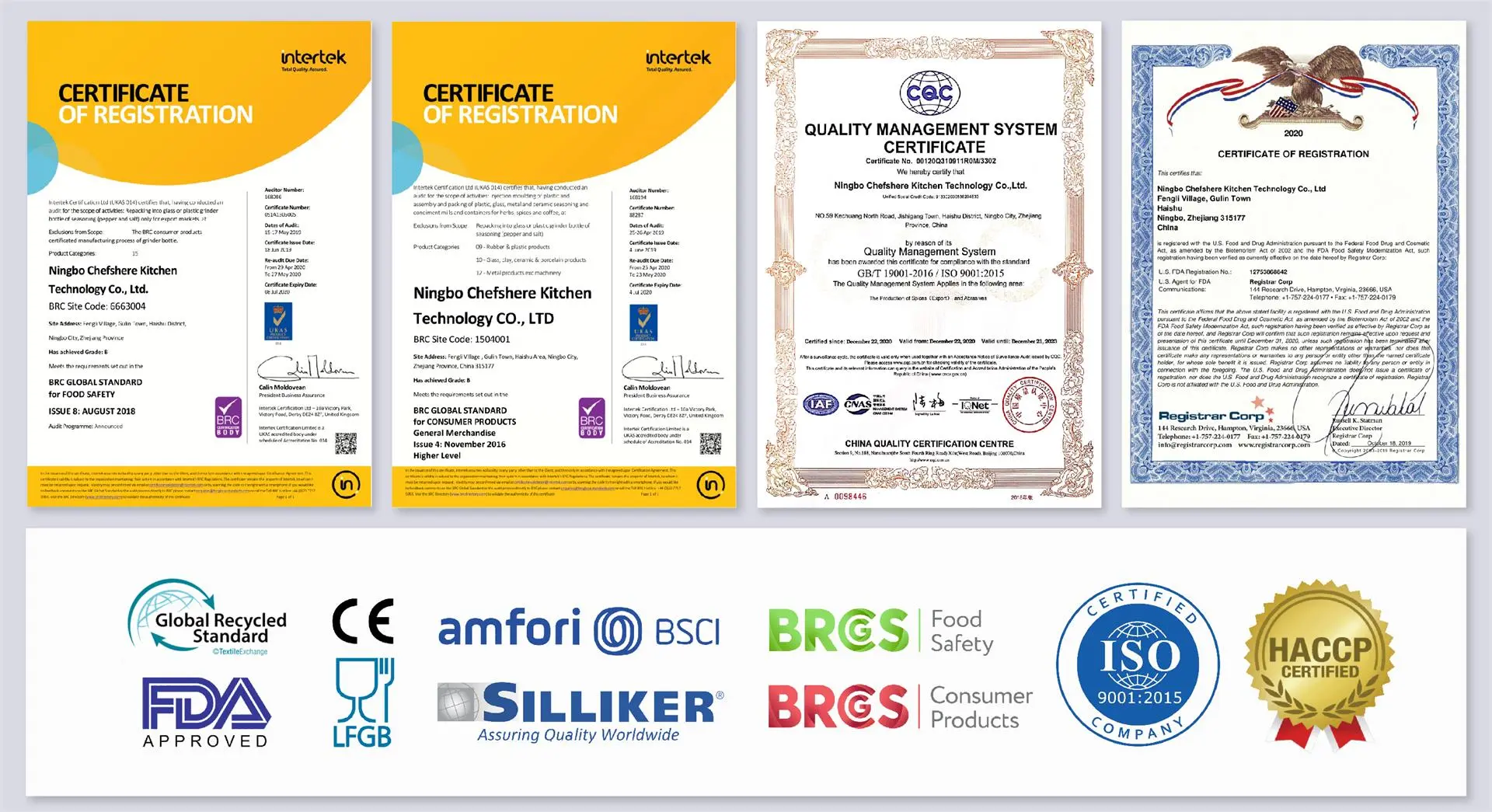
Our manufacturing protocols undergo strict audits conducted by international third-party testing organizations. All product lines hold formal LFGB and FDA compliance verifications, verifying that all component surfaces are non-toxic, lead-free, and perfectly safe for continuous food contact.
Intermodal Transit Optimizations
Navigating landlocked logistics to Bamako requires professional packaging strategies. We employ heavy-duty, moisture-sealed, corrugated master export cartoning and reinforced palletization schemes to survive maritime ocean freight voyages and subsequent overland truck corridors from Dakar or Abidjan.
Customs Clearance Integration
We provide comprehensive documentation support tailored for West African import workflows, including clean Bills of Lading, detailed commercial invoices, legalized packing lists, certificates of origin, and custom technical reports to accelerate regional port verification cycles.
Secure Factory-Direct B2B Pricing for Mali Distribution
Partner with an award-winning industry leader. Maximize your commercial margins through resilient engineering, reliable large-scale production capacities, and localized market compliance guarantees.
Send Inquiry NowExtended Product Line Showcase
Discover our high-durability kitchen grinding instruments and custom accessory configurations optimized for wholesale, retail branding, and large-scale catering services.







Expert Strategic Deep-Dive: Frequently Asked Questions
Addressing Technical Architecture, Procurement Frameworks, and Cross-Border Logistics Variables
Conversely, Chinagama’s austenitic AISI 304 stainless steel configurations offer a completely non-porous, chemically inert external shield. This grade contains a high percentage of nickel and chromium, building an immutable passivation layer that permanently resists rust, mechanical impact fatigue, and biological degradation. This material choice guarantees absolute compliance with international food hygiene standards while ensuring the equipment maintains its structural integrity and aesthetic look in demanding commercial kitchen environments across decades of continuous use.
Our internal design and engineering teams use advanced 3D CAD modeling software and structural finite element analysis (FEA) to transform initial sketches into operational production prototypes in exceptionally short turnarounds. This thorough engineering approach has won multiple international recognitions, including the Red Dot and iF Design Awards, giving our business partners a strong competitive advantage in high-end distribution markets.
Chinagama eliminates this issue by using high-density Alumina (Al₂O₃) ceramic cores across our premium product lines. Our ceramic elements are fired at industrial temperatures exceeding 1,600°C under precise pressure controls, resulting in a mineral matrix that ranks just below diamond on the Mohs scale of hardness. This material is completely rustproof and immune to corrosion from acids or minerals. This means the grinding surfaces retain their sharp cutting edges over millions of rotations, ensuring consistent particle size distribution from coarse cracks to ultra-fine powders.
Upon reaching these coastal ports, cargo travels via secure rail or road transport corridors directly to Malian customs warehouses. To protect against the vibrations and handling stress common to overland transport, all shipments feature advanced product packaging. This includes individual product protection, moisture-barrier shrink wraps, internal structural dividers, and impact-resistant, multi-wall corrugated master export cases bound securely to heavy-duty pallets.
These global credentials facilitate customs clearance processes within ECOWAS frameworks, confirming that your imported inventory complies with strict health and safety protocols across international borders.