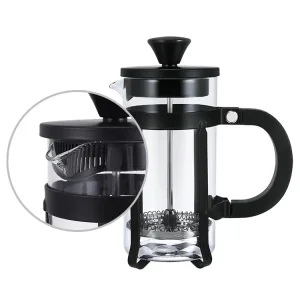
 Chinagama
Premium Product Showcase
Explore our leading smart-tilt gravity mills, rechargeable grinding solutions, and design-forward kitchenware selected for global distribution.
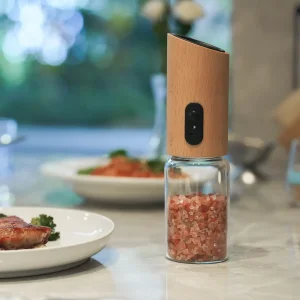
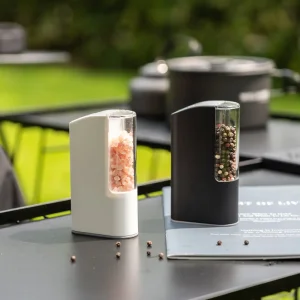




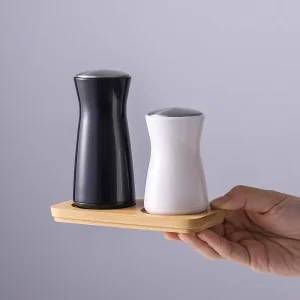

Executive Whitepaper: The Evolution of Gravity-Activated Spicing
An authoritative analysis of why modern consumer packaged goods (CPG) brands, restaurant suppliers, and global kitchenware retailers are switching to premium gravity mills.
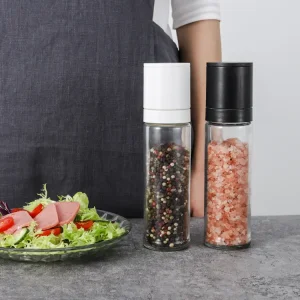
Over the last decade, the kitchenware industry has witnessed a paradigm shift away from simple manual grinding mechanisms to ergonomic, automated systems. At the forefront of this evolution is the gravity spice mill—a product designed around the basic user intent of single-handed operation, consistent particle-size distribution, and clean, clutter-free prep spaces. For B2B procurement officers, sourcing gravity spice mills is no longer just a transaction; it requires a deep understanding of manufacturing processes, material composition, and certification compliance.
As a leading industry stakeholder since 1997, Chinagama has driven culinary innovations through rigid testing protocols, structural integrity assessments, and design-led engineering. Our focus on E-E-A-T (Experience, Expertise, Authoritativeness, and Trustworthiness) ensures that every mill leaving our ISO-certified facilities serves as a long-term profit driver for brand partners. In this whitepaper, we breakdown the technical parameters, structural efficiency models of Chinese Factory 4.0 production, and localized compliance architectures required to scale imports in European, American, and Asia-Pacific markets.

Technology Roadmap & Future Outlook
How Chinagama integrates cutting-edge electronic engineering and micro-motion technology into everyday household products.
Micro-Gravity Motion Sensors
Replacing mechanical contact switches with high-precision solid-state tilt microswitches. Our mills detect precise 45-degree angle transitions to prevent accidental operation while maintaining instant dispersion response times under 0.2 seconds.
Power Density & Battery Innovation
Migrating from standard alkaline arrays to high-capacity USB-C rechargeable Lithium-ion cells. Our research targets up to 500 grinding cycles per charge, reducing global e-waste and aligning with EU green energy consumption metrics.
Eco-Friendly Material Integrity
Pioneering biodegradable, BPA-free plant resins alongside high-grade FSC timber and recyclable stainless steel outer shells. We plan to integrate 40% post-consumer recycled plastics into consumer housings by 2026 without sacrificing tensile strength.
Macro Industry Solutions
Bespoke supply frameworks constructed to solve distinct challenges faced by high-volume retailers, distributors, and the Horeca sector.
FMCG Brands & Spice Packers
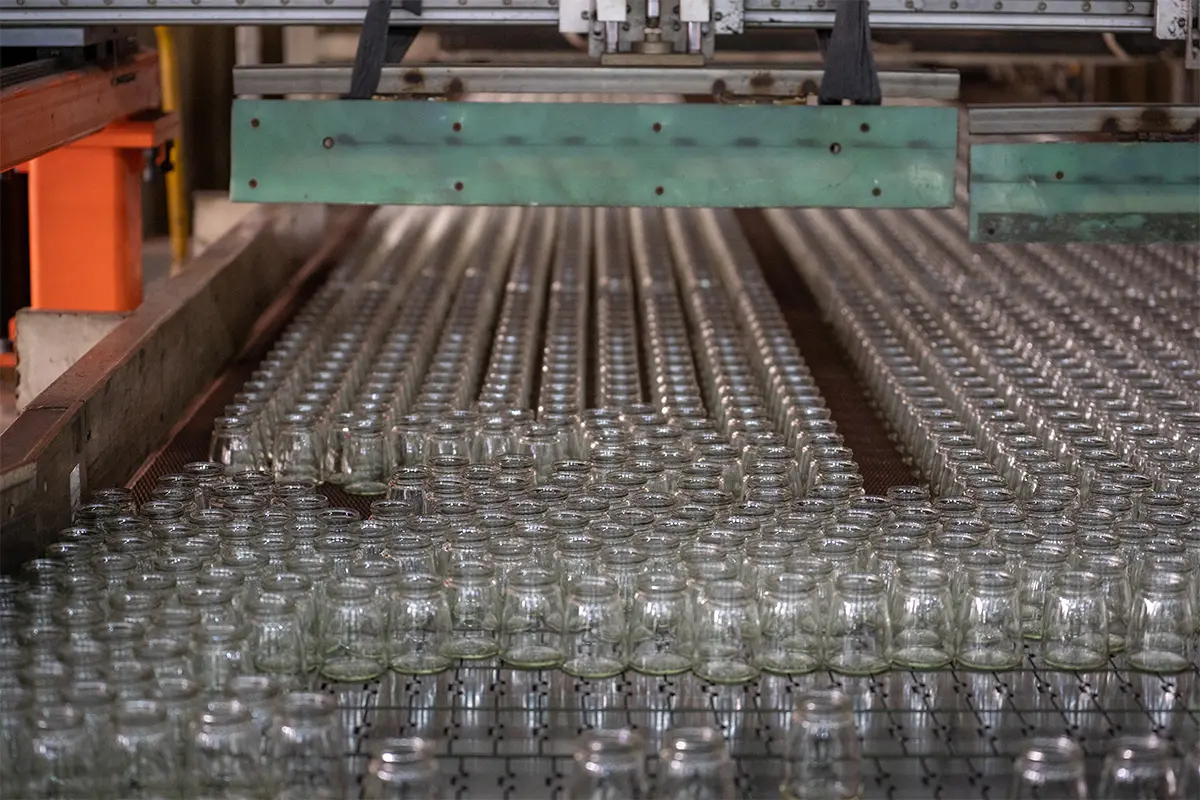
For large-scale spice processing companies, packaging design needs to facilitate high speed mechanical filling while maintaining strict product freshness parameters. Our OEM solutions provide pre-assembled, container-ready gravity grinders built directly into glass jar threads. This integration decreases post-filling operations, resulting in a 15% reduction in production cycle times.
Global Retail Chains & Private Labels
We provide full-spectrum ODM capabilities for retail giants requiring custom designs, shelf-ready packaging, and competitive tier prices. From localized laser engraving on wood assemblies to specialized color-matching of plastic components, we guarantee that private label designs remain distinct from competitors on store shelves.
Premium Hospitality & Foodservice (Horeca)
High-end restaurants and hotels demand durable products. We manufacture food-contact-safe mills that withstand continuous drop impacts, intensive commercial usage, and regular exposure to moisture. Our ceramic burrs maintain high grinding efficiency over tens of thousands of cycles without imparting metallic odors.
Localization Support & Compliance Assurance
Mitigating cross-border trade risks through robust regulatory conformity, intellectual property protection, and regional logistics support.
International Certifications
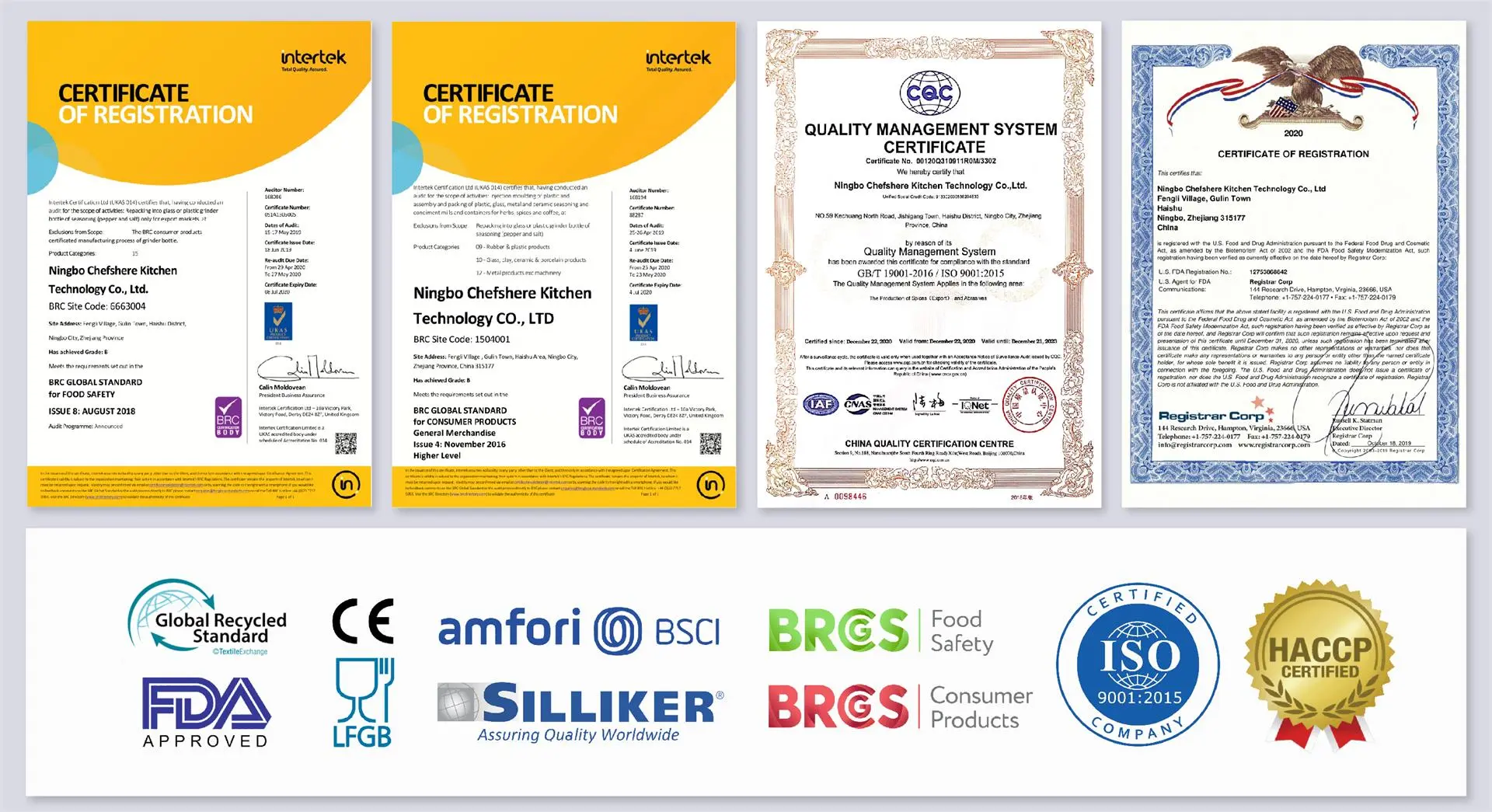
All products undergo strict verification programs to satisfy LFGB, FDA, CE, and RoHS standards. We collaborate with internationally accredited testing houses, including SGS and TÜV Rheinland, to supply authentic compliance files for custom clearance documentation.
IP & Patent Protection
With more than 300 active patents worldwide, we respect client IP rights. When you partner with us for proprietary designs, we establish strict NDAs and exclusive sourcing agreements to protect your brand equity across regional distribution channels.
Global Supply Networks
We support multiple shipping terms, including FOB Ningbo, CIF, and DDP to main European and US ports. By coordinating with major shipping lines, we help optimize ocean transit schedules, manage inland logistics, and reduce port detention charges.
China Factory 4.0: Supply Chain Resilience & Structural Efficiency
A look inside our automated production departments, high-precision molding equipment, and strict quality control workflows.
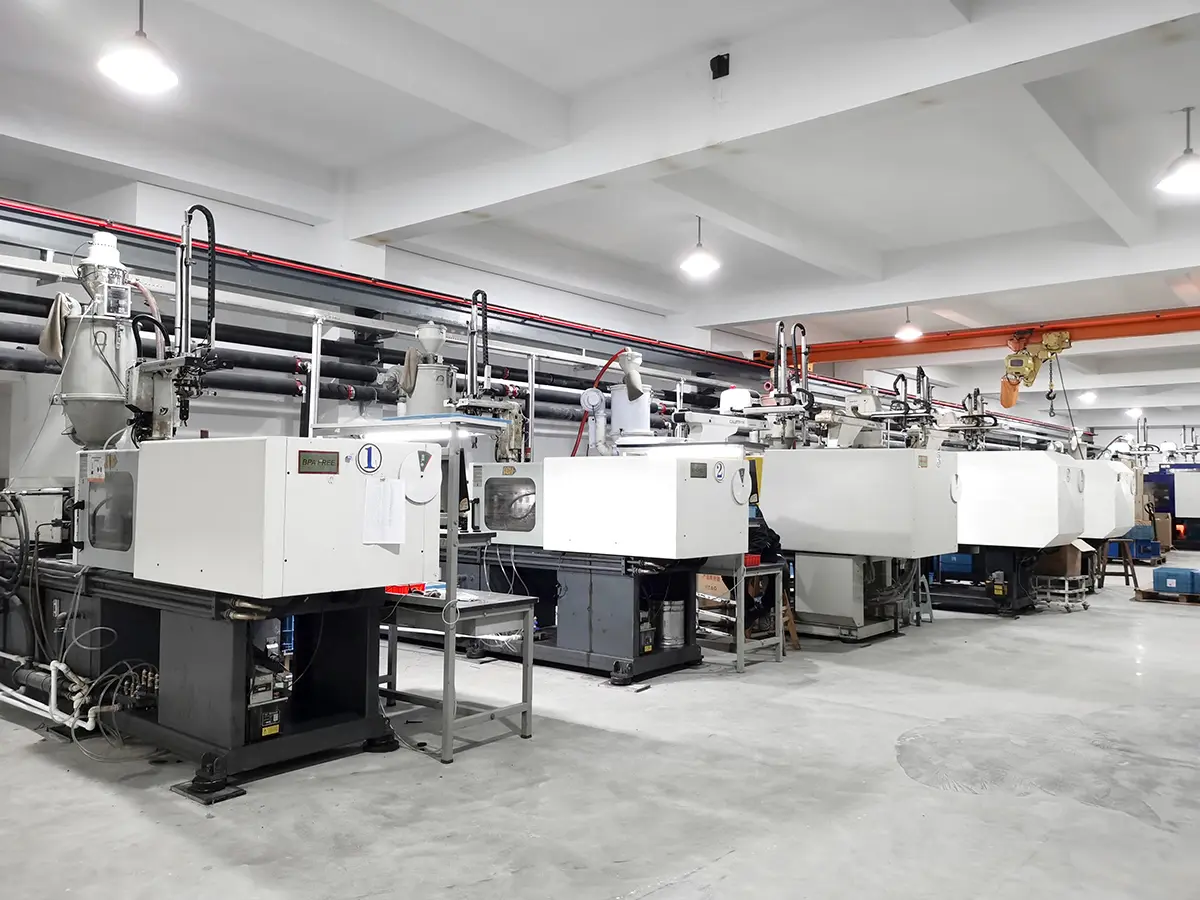
Modern manufacturing demands structural flexibility and speed-to-market advantages. Chinagama's production plant features automated injection molding assemblies, high-speed CNC metal grinding machinery, and electronic circuit board pick-and-place lines. By integrating key manufacturing stages under one roof, we eliminate intermediate supply chain delays and reduce overall costs.
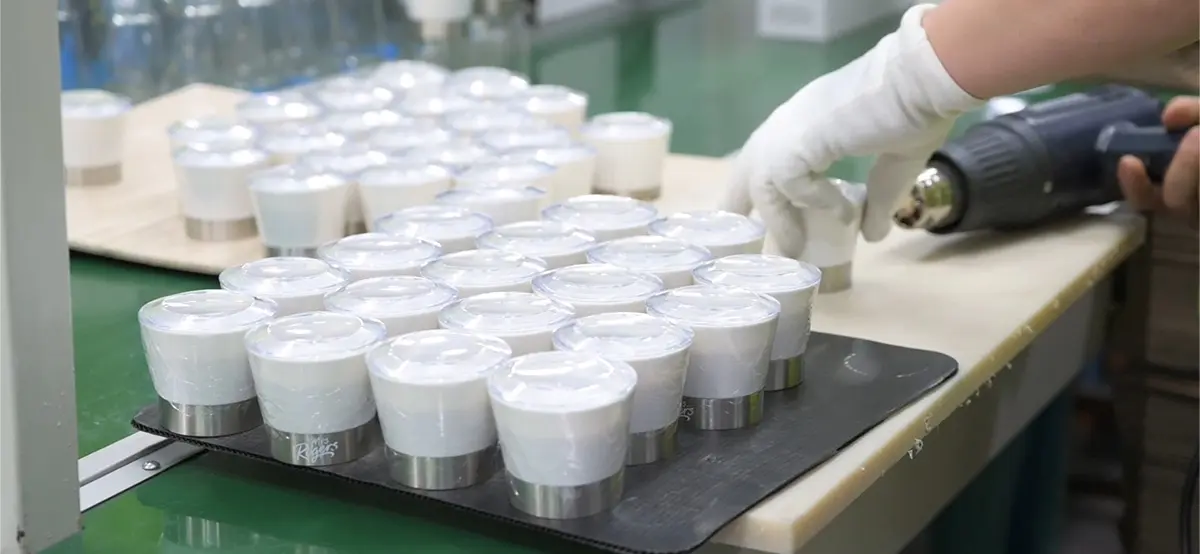
We perform rigorous physical stress tests on every manufacturing batch. This includes dropping assemblies from heights of 1.5 meters to check impact resistance, testing mechanical drive torque limits, and simulating long-term humidity exposure on electronic components. Our QA procedures ensure that critical tolerances meet narrow dimensional specifications, reducing consumer defect rates to below 0.15%.
This automated structure also provides operational flexibility. Our modular assembly lines let us change product colors and configurations within 48 hours, enabling fast production pivots to match changing market trends. B2B buyers gain from reliable lead times, optimized pricing, and predictable product quality.

Global Enterprise Sourcing, Materials & Pricelist Analysis
A transparent breakdown of cost structures, material choices, and estimated price brackets for B2B procurement planning.
Sourcing gravity spice mills at scale requires balancing material costs against target retail margins. The final Unit Price (FOB) is determined by structural material selection, battery power capacity, packaging complexity, and order volume. The table below outlines our standard price ranges based on configurations and order volumes.
| Mill Type / Materials | Key Core Components | MOQ (Units) | FOB Price (USD Range) | Target Retail Market Segment |
|---|---|---|---|---|
| Standard Gravity Mill (High-strength ABS body) |
Ceramic Burr, Dry Cell Battery Core (4*AAA) | 2,000 | $1.80 - $2.50 | Value Retailers, High-Volume E-Commerce |
| Mid-Range Gravity Mill (Stainless Steel / Wood Finish) |
Alumina Ceramic Burr, Dry Cell Array | 1,000 | $2.60 - $3.80 | Mid-Tier Specialty Retail, Culinary Brands |
| Rechargeable Gravity Mill (Stainless Steel, USB-C Port) |
Ceramic Burr, 500mAh Li-ion battery | 1,000 | $4.20 - $5.80 | High-End Cookware Retailers, Premium Gift Markets |
| Smart Gravity Mill (Timber casing, Rechargeable) |
Alumina Ceramic Burr, Advanced Microswitches | 500 | $5.90 - $7.90 | Luxury Giftware, High-End Boutique Kitchen Brands |
*Important Notice for Procurement Teams: Prices shown are estimates. Custom color matching, bespoke box shapes, special packaging inserts, or private labeling can influence the final unit cost. Contact our sales department to receive a firm quote tailored to your exact specifications.
Our Journey: A Legacy of Innovation Since 1997
How we evolved from a regional export agent into a leading, patent-holding developer of consumer kitchenware.
Establishment & Initial Focus
Chinagama started its journey with a focus on general trade and sourcing activities, building relationships across regional kitchenware sectors.
Transition to Production
Driven by a passion for culinary design, we shifted from trading to direct manufacturing, establishing our first assembly lines to control quality.
Factory Upgrades & Standardization
We built a food-grade production facility to satisfy growing demand from international markets, standardizing our quality management workflows.
R&D Leadership & Patents
We earned our national High-Tech Enterprise designation. Our designs went on to win prestigious international Red Dot and iF Design Awards.
Case Studies: Solving Complex Engineering Challenges
Real-world examples of how we collaborate with international brands to transform designs into successful retail products.
The Bird Spout Gravity Oil Dispenser
The Opportunity: Market research showed growing consumer demand for a clean, single-handed gravity oil dispenser that would prevent spills and messy drips.
The Solution: Chinagama developed a gravity-sensitive bird-beak spout mechanism. The design automatically opens when tilted and closes when returned to an upright position. After testing multiple prototypes, the bird spout shape was finalized, balancing smooth liquid flow with a modern appearance.
The Result: The product received wide market acceptance and won the Red Dot Design Award, remaining one of our most popular oil dispensers.

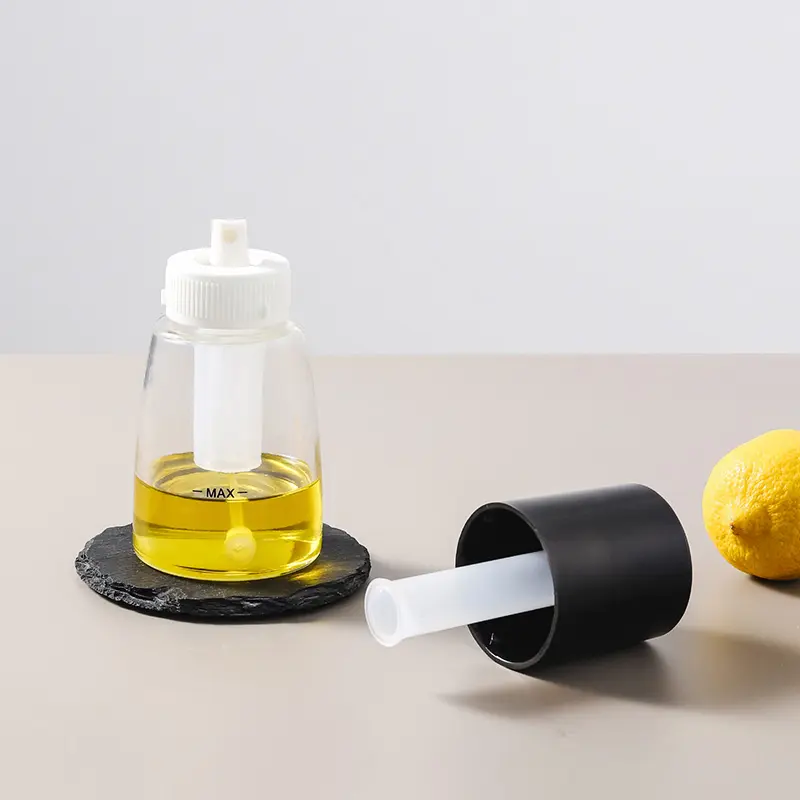
High-Pressure Oil Mist Sprayer
The Challenge: A prominent kitchenware brand wanted an oil mist sprayer built to strict durability standards. Early prototypes using ABS and PMMA plastics showed stress cracking when exposed to common vegetable oils, presenting reliability concerns.
The Innovation: Our engineering team tested several polymer alternatives, ultimately selecting a high-grade, food-safe Polypropylene (PP) material. This adjustment solved the stress cracking issue while maintaining a consistent mist pattern.
The Outcome: The sprayer met all regulatory and physical durability standards, helping our client grow their market share in the cooking spray category.
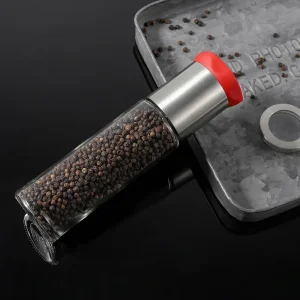
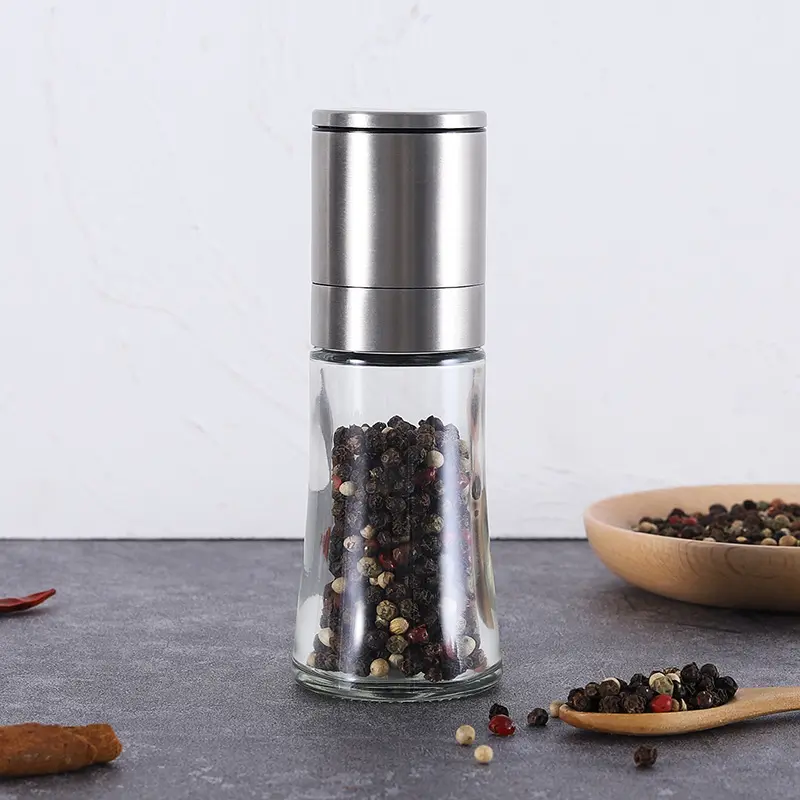
Compact Straight Pepper & Salt Grinder
The Objective: Standard manual grinders were often heavy, overly complex, or physically bulky for users with limited grip strength.
The Engineering: We designed a compact, straight-profile grinder focused on basic ergonomics. By using a streamlined drive shaft and high-torque ceramic gears, our team reduced the external size by 20% while maintaining the grinding performance of larger models.
The Outcome: The compact model earned strong customer satisfaction ratings and positive end-user feedback, proving the value of simple, focused product design.
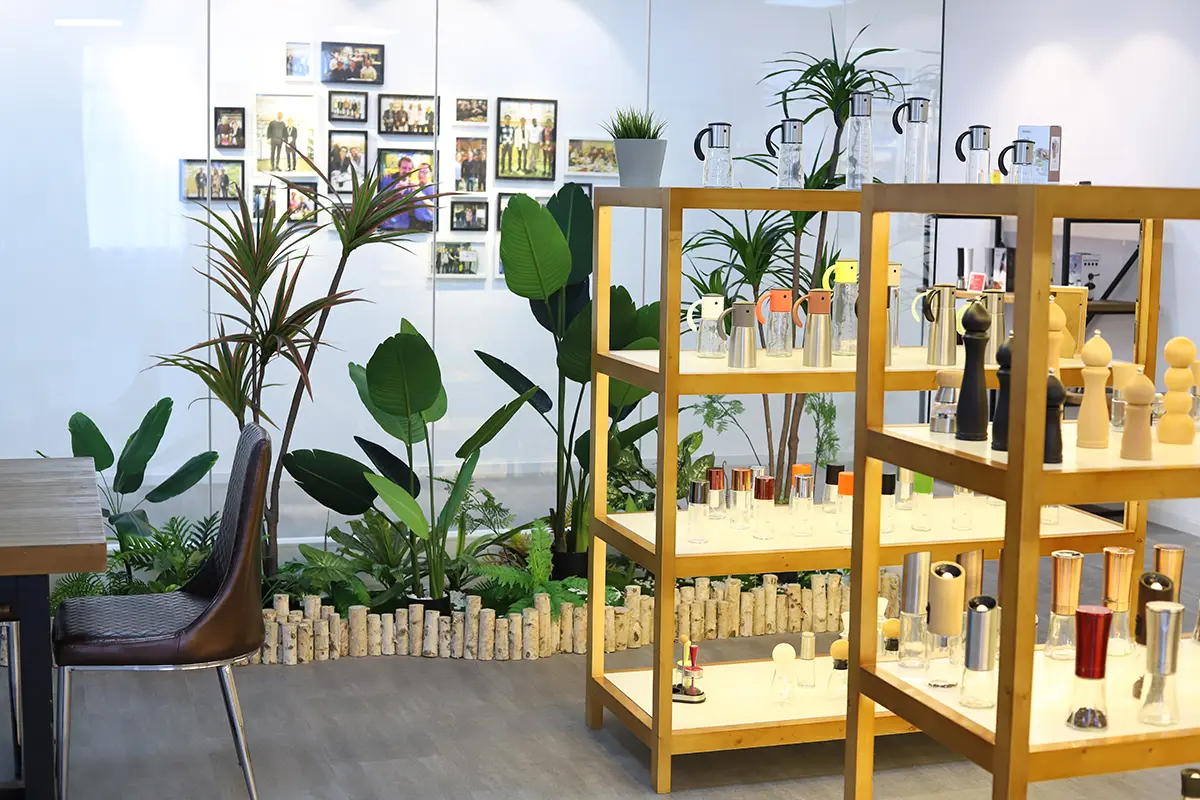
Expert Research & Development Department
How our engineering department helps clients design, prototype, and manufacture custom kitchen tools.
Developing successful kitchenware requires deep expertise in mechanical design and injection molding behavior. Our R&D department uses advanced 3D modeling software, mold flow analysis, and rapid prototyping tools to evaluate products before cutting steel production molds. This planning stage reduces tooling revisions and accelerates product launch timelines.
Our prototyping shop lets us produce functional samples in various plastics, wood finishes, or metals. Clients can test the hand feel, weight distribution, and adjustment controls of a new gravity mill before committing to high-volume manufacturing. This phase helps identify and resolve potential assembly issues, ensuring smooth manufacturing and reliable product performance.



Frequently Asked Questions (FAQ)
Essential guidance for B2B procurement managers, sourcing agents, and distributors looking to buy gravity spice mills.
What is the standard MOQ for OEM/ODM gravity spice mills?
Our standard MOQ is 1,000 units per model for standard materials (ABS, acrylic, or stainless steel). For custom paint finishes, unique laser engravings, or custom structural designs, the MOQ starts at 2,000 units to offset manufacturing setup times.
Why are ceramic burrs preferred over stainless steel burrs in spice mills?
Ceramic burrs are highly resistant to wear and rust, making them ideal for salt and moisture-rich spices. Unlike steel, ceramic components do not generate friction heat that can degrade delicate essential oils, helping preserve the spice's natural aroma.
How does gravity activation work in these mills?
Our mills contain an internal tilt micro-switch. When tilted past 45 degrees, the switch closes the circuit and starts the grinding motor. When returned to an upright position, the circuit opens, immediately stopping the motor to prevent spice dust from spilling onto table surfaces.
What quality control standards do you apply to rechargeable batteries?
We source rechargeable lithium batteries from certified suppliers, and all cells carry UN38.3, MSDS, and CE power safety compliance documents. Every battery batch undergoes cycle life and temperature testing to ensure safe operation over its useful lifetime.
Can we request custom packaging design for retail stores?
Yes, we provide full ODM packaging services. Our design team can develop custom color boxes, window cartons, display stands, and protective cardboard inserts to prepare your products for retail shelves.
How do you handle intellectual property (IP) for unique custom designs?
We prioritize IP protection. Before beginning any design or mold work, we sign detailed Non-Disclosure Agreements (NDAs). We do not display proprietary designs in our public catalogs or at trade shows without written consent from our brand partners.
Additional Product Categories
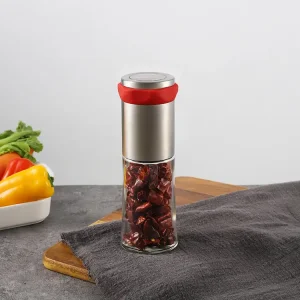
Browse our complete catalog, featuring manual wood grinders, patent chili mills, and specialized coffee preparation tools.