 Chinagama
Featured Engineering: High-End Spice & Coffee Mills
Explore our premium selection of customizable, food-safe grinding mechanisms and modern dispensing systems constructed for international brands.

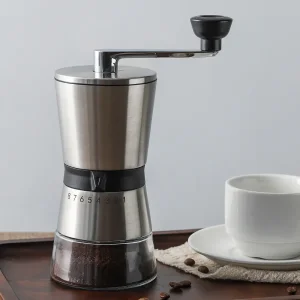
Wholesale Customized Contemporary Salt and Pepper Mills
Request Info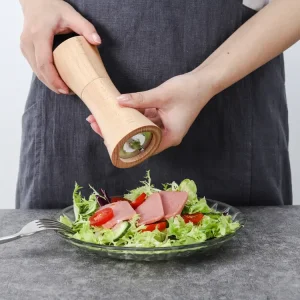
Wholesale Wooden Pepper Mill
Request Info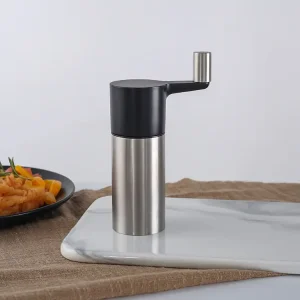
High-Quality Bulk Sale Stainless Steel Nutmeg Grinder Manufacturers, Product
Request Info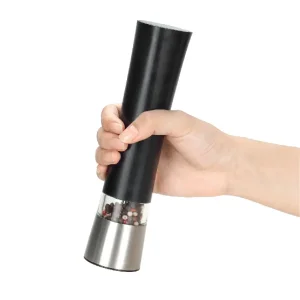
Wholesale IF Award Spice Grinder and Crusher
Request Info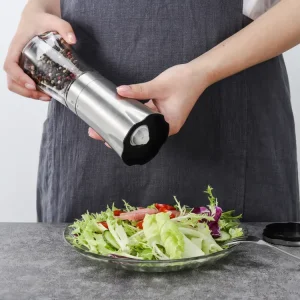
Custom Metal Battery Operated Pepper Grinder with Ceramic Burr
Request Info
Wholesale Stylish Wooden Spice Grinder
Request Info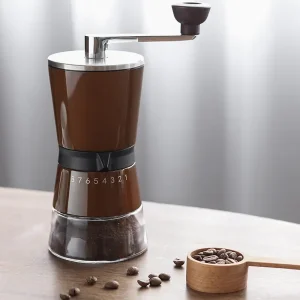
ODM Customized Manual Coffee Mill Grinder
Request Info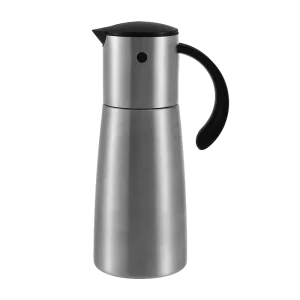
Custom Stainless Steel Gravity Olive Oil Dispenser
Request InfoExecutive Briefing: Navigating the China Glass Spice Grinder Supply Chain
In the highly competitive culinary and home goods sectors, global brands and wholesale distributors look for manufacturing partners that offer a mix of structural innovation, material safety, and scalable capacity. The keyword "Famous ChinaGlassSpiceGrinderManufacturer Quotes & Factory" points to an important hub in the global supply chain: high-precision glass and ceramic component manufacturing based in China.
As consumer preferences shift toward fresh-ground spices, culinary transparency, and aesthetic kitchen tools, the requirements for glass spice jars and grinders have moved beyond basic storage. Today's procurement teams evaluate manufacturers using strict criteria based on Google's Search Quality Evaluator E-E-A-T guidelines (Experience, Expertise, Authoritativeness, and Trustworthiness). This whitepaper provides a comprehensive overview of the design methodologies, regulatory frameworks, technological roadmaps, and custom ODM/OEM solutions that define leading spice grinder factories today.
"A premium grinder is not just houseware; it is a precision instrument where material chemistry, mechanical engineering, and kitchen ergonomics meet to deliver flavor consistency."
Evolution of China's Grinding Tool Industrial Cluster
The modern Chinese glass spice grinder industrial cluster has evolved from a basic manufacturing base into an innovation-led hub. Historically centered on pure trade operations, factories like Chinagama began their journey in 1997. By recognizing shift patterns in digital trade in 2001, early pioneers built direct connections with Western consumer markets, shifting from simple trading agencies to dedicated manufacturing operations in 2003.
By 2012, the establishment of standardized, food-grade production facilities marked a new phase in the industry. As the sector modernized, leading manufacturers pursued advanced technology certifications. The designation of high-tech enterprises in 2015 helped drive research, leading to design awards such as the Red Dot Design Award and iF Design Award. Today, China's top factories use automated injection molding, robotic glass assembly, and strict Quality Assurance to produce over 12 million units annually.

Global B2B Sourcing Demands and Material Selection
A comparative analysis of the material choices, mechanics, and design features that purchasing managers prioritize when sourcing glass grinders in bulk.
Glass Integrity & Lead-Free Chemistry
Premium buyers require high-borosilicate glass or heavy-duty soda-lime glass. These materials offer thermal shock resistance, surface clarity, and chemical stability, ensuring the glass does not leach alkaline compounds or micro-shards under mechanical pressure.
Grinding Mechanism Hardness
Alumina ceramic burrs (95% Al2O3) are preferred for salt and spice grinding due to their corrosion resistance. For precision coffee grinding, carbon steel or SUS420 stainless steel burrs are selected to maintain sharp cutting edges.
Ergonomic Ease & Torque Profiles
The torque ratio of the turn cap must match natural hand rotations. Poor thread tolerances can lead to high mechanical resistance, causing user fatigue and potential product failures.
Commitment to Quality: Strict Manufacturing Controls
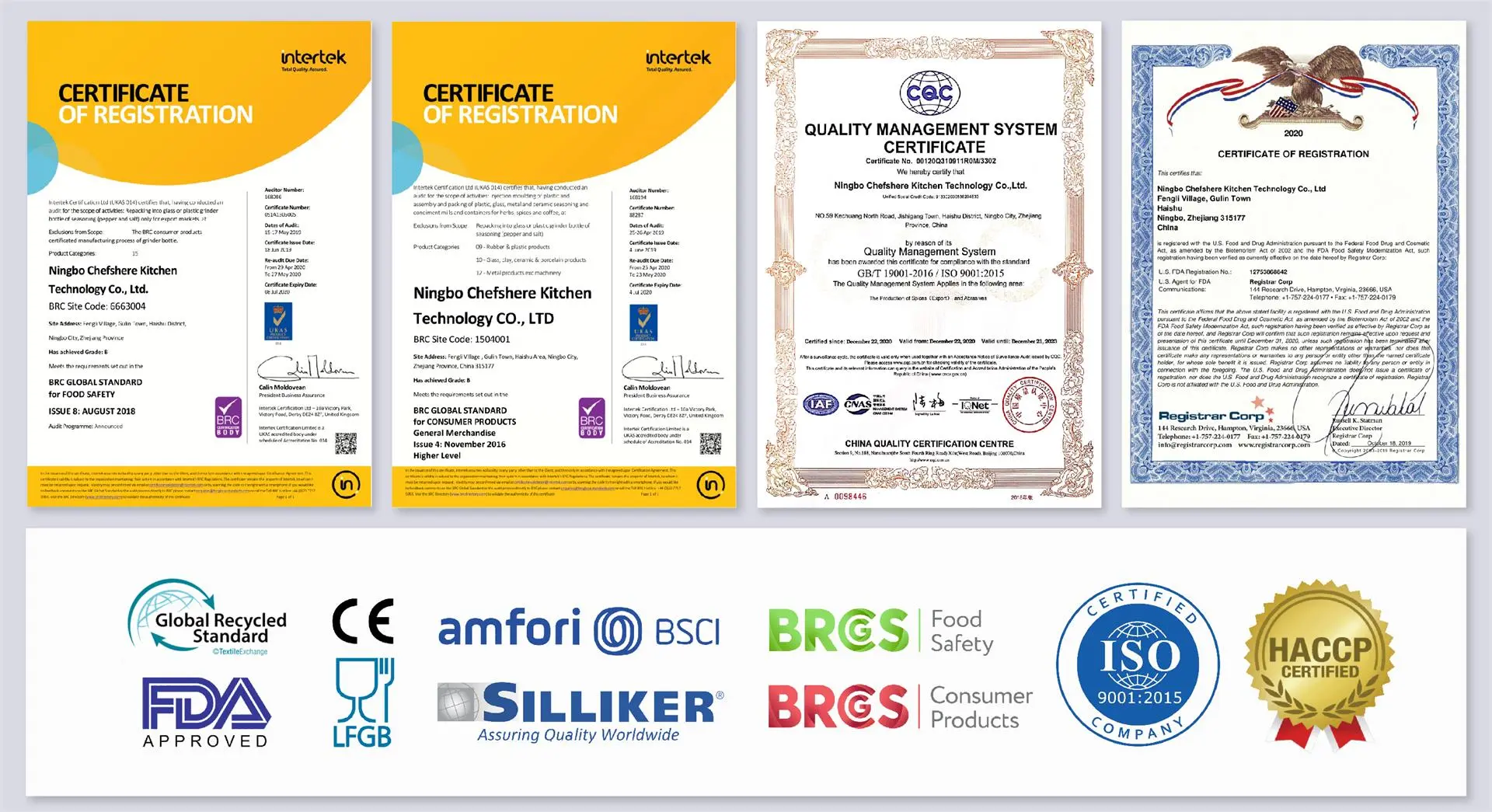
Operating a food-contact manufacturing business requires strict adherence to international safety standards. Chinagama uses an in-house factory testing setup that closely monitors products from initial design to final assembly. Leading regulatory testing bodies like LFGB, FDA, and SGS verify that these products meet chemical safety and mechanical durability standards.
Quality control starts at the raw material stage. Raw polymers, glass batches, and ceramic blanks are inspected for purity. During production, coordinate measuring machines (CMM) verify the dimensional accuracy of the grinding gears. This precision ensures consistent grind settings, preventing issues like uneven particle sizes in salt, pepper, or coffee mills.
Localization Support, Regulatory Compliance, and Quality Assurance
Global supply chain management requires navigating varied local regulations. A top-tier manufacturer must offer support that extends beyond the factory gate, helping customers address local customs, retail standards, and intellectual property requirements.
European & US Food Contact Compliant
All component materials, including polypropylene (PP), glass, and alumina ceramics, undergo testing to ensure compliance with FDA 21 CFR and LFGB requirements. This guarantees the products are free from lead, cadmium, phthalates, and BPA.
Patented Intellectual Property Security
With over 300 active patents, top-tier factories help protect B2B clients from patent infringement claims in European, North American, and Asian retail markets. This ensures secure market access for proprietary designs.
Custom Packaging & DDP Logistics Support
From custom cardboard display boxes to complex retail packaging designs, factories provide complete supply chain integration. Full logistical support, including DDP, FOB, and CIF arrangements, helps streamline delivery to regional warehouses.
Engineering Case Studies: Problem Solving in Culinary Design
An overview of how Chinagama's R&D team addresses material limits, ergonomics, and design details to bring award-winning kitchenware to market.
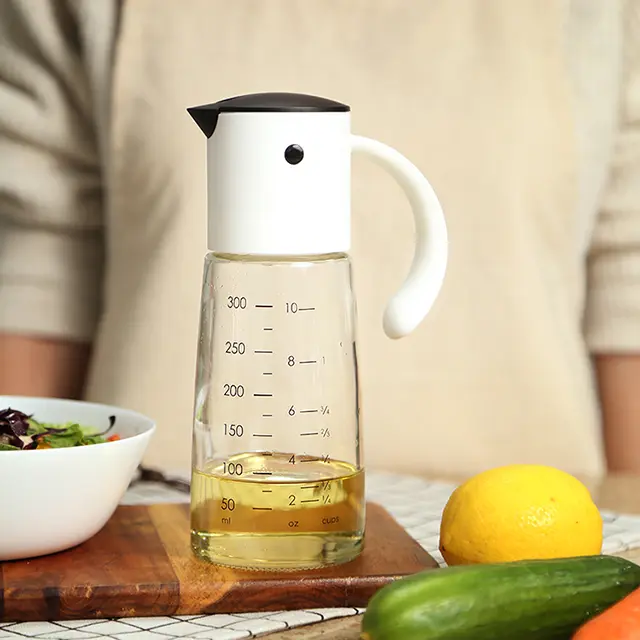
Case Study 1: The Bird Spout Gravity-Fed Oil Dispenser
The Challenge: Most traditional oil dispensers on the market require manual venting or two-handed operation, and often suffer from messy drips down the outer container wall.
The Innovation: Chinagama developed a gravity-activated valve system housed within a custom bird-spout design. The lid opens and closes automatically based on tilt angle, allowing for easy one-handed operation. The internal geometry features a return-flow channel that routes excess oil back into the main glass chamber, eliminating messy drips.
The Result: This gravity-fed oil dispenser combined utility with clean aesthetics, earning a prestigious Red Dot Design Award and becoming one of our most popular liquid dispensing products.
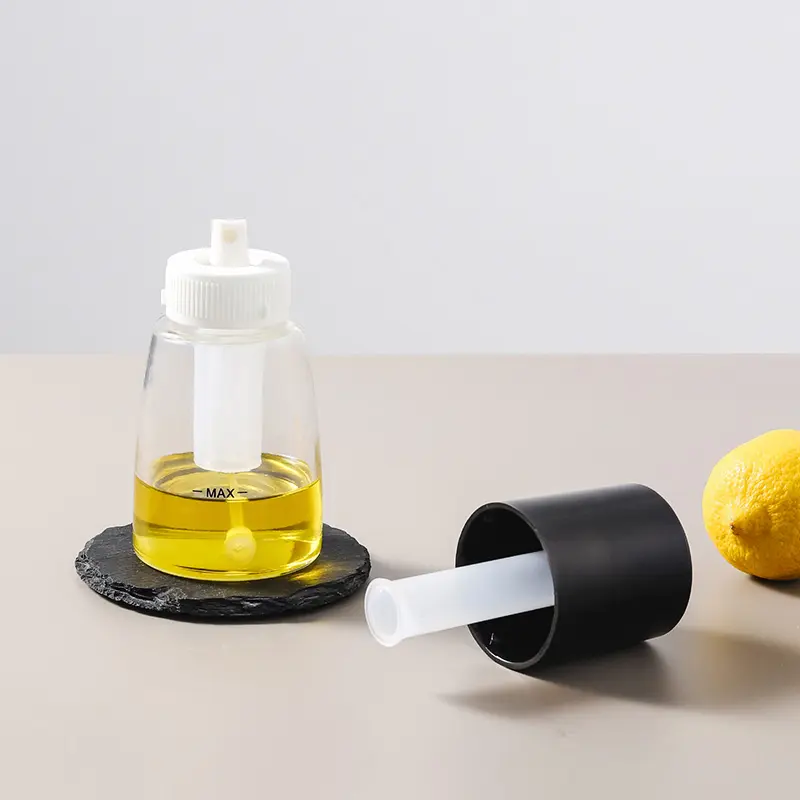
Case Study 2: Addressing Environmental Stress Cracking in Oil Spray Tools
The Challenge: During the development of a high-performance oil mist sprayer, initial prototypes using ABS and PMMA plastics showed stress-cracking after contact with lipids under pressure.
The Innovation: Chinagama's material engineers ran testing cycles and chose to use a specialized, non-toxic, high-density Polypropylene (PP) compound. This material choice eliminated chemical stress cracking while maintaining structural stability under pressure.
The Result: The resulting oil sprayer met safety and durability requirements, helping our brand partners expand their market share in the premium spray-dispenser segment.
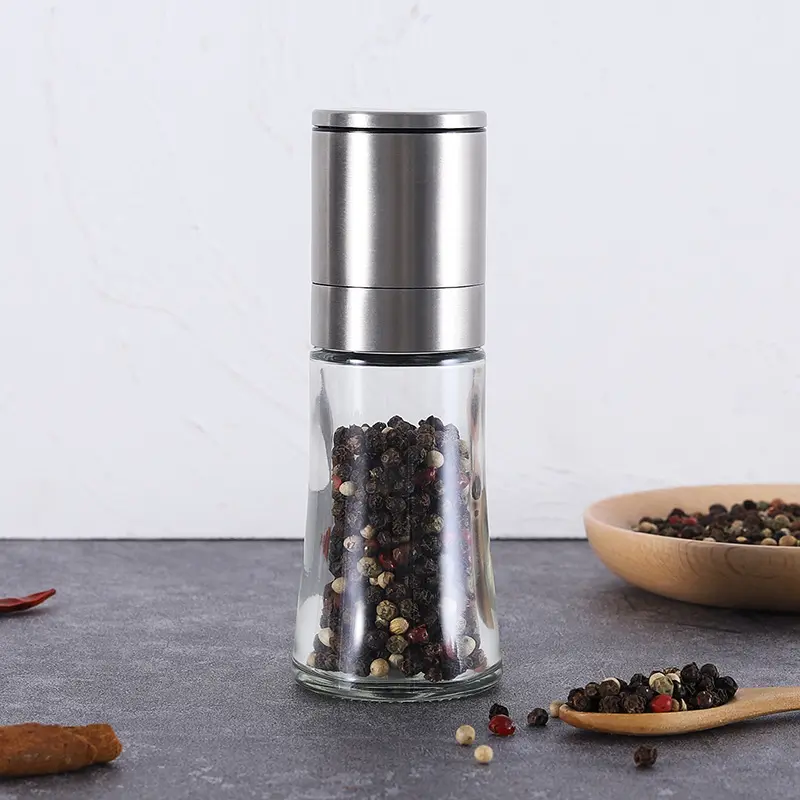
Case Study 3: The Compact Straight-Line Dual-Stage Salt & Pepper Mill
The Challenge: Many traditional manual spice grinders use complex adjustment systems that add weight and bulk, making them less user-friendly and more difficult to clean.
The Innovation: Chinagama designed a compact, straight-sided spice grinder featuring a integrated burr-adjustment system. By aligning the central shaft and using a high-density ceramic grinding core, our engineers reduced mechanical play, giving users precise control over grind sizes.
The Result: The slim, clean design proved popular with home cooks and commercial brands alike, demonstrating that simplicity and functional engineering can work hand-in-hand.
Technological Roadmap and Future Outlook
Looking ahead, the glass spice grinder manufacturing sector is focusing on automation, smart design, and sustainable materials. In modern factories, automated assembly systems now handle the task of mounting ceramic grinding burrs into glass housings. This automation reduces assembly variations, leading to more consistent performance across production runs.
Material sustainability is also a major focus for research and development. Manufacturers are testing biodegradable plastic composites for outer grinder caps and exploring options for recycled post-consumer glass. These developments aim to reduce environmental impact without sacrificing strength, clarity, or food safety. By combining modern design with eco-friendly materials, the next generation of kitchen tools will be built to meet both performance and environmental standards.
Frequently Asked Questions: Global B2B Sourcing FAQ
Clear answers to common questions about OEM/ODM processes, material specifications, quality control, and supply chain logistics.
Industrial Supply Catalog: Professional Dispensing & Grinding Tools
Our complete line of spice mill jars, custom coffee grinders, and versatile home kitchenware options, built to international standards.
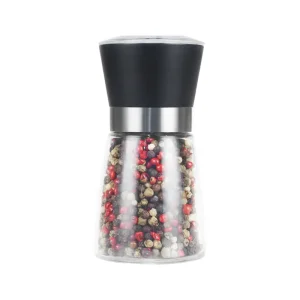
ODM Good Spice Grinder with Glass Jar
Request Info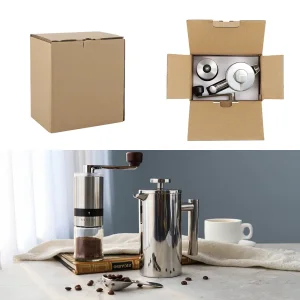
Wholesale Customized Manual Coffee Mill & French Press Company, Factory
Request Info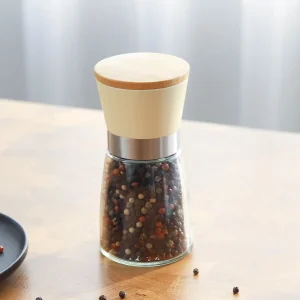
Wholesale Best Small Pepper Grinder
Request Info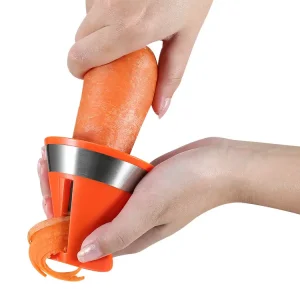
Buy Bulk Versatile Mini Vegetables Fruits Slicer Companies, Factories
Request Info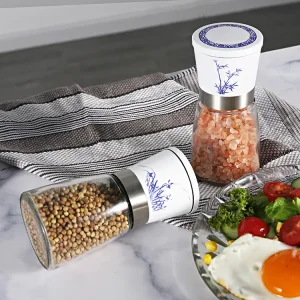
Famous Commercial Pepper Grinder with Pattern Factories, Factory
Request Info
China Bulk Sale High Quality Glass Water Bottle and Mug Set Quotes, Pricelist
Request Info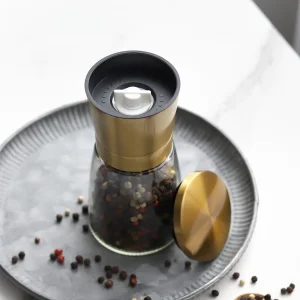
China Wholesale Gold Pink Salt and Pepper Grinder Supplier, Quotes
Request Info