For restaurants, cafés, and specialty food shops, the way olive oil is presented can shape service and customer confidence. A Glass Olive Oil Dispenser offers a visible, practical option for tables, tasting counters, or retail displays. Guests can see the oil’s color and approximate fill level without opening the container. That small detail can help staff plan refills. It also keeps the presentation tidy. Appearance matters, but it is only part of the decision.
In daily use, small design choices count. A controlled spout can make pouring easier, while a stable base may reduce tipping on a busy table. Glass does not retain food odors, and many models are simple to wash. Yet cleaning depends on the opening and removable parts. Some dispensers are fragile. They need careful handling around crowded counters and hard surfaces. That trade-off is easy to overlook. Clear glass may also show residue, so routine cleaning remains important. It is not maintenance-free.
Before choosing one, compare capacity, grip, spout fit, and how thoroughly each part can be cleaned. For businesses that refill often, a transparent body makes level checks convenient, but it does not replace careful inspection or clear product labeling. No single style suits every service setting. I would not choose by appearance alone. Consider staff habits, table space, and how frequently the dispenser will be handled. A thoughtful choice balances presentation with everyday care. The sections ahead explore the features, benefits, and limitations worth weighing before making a purchase.
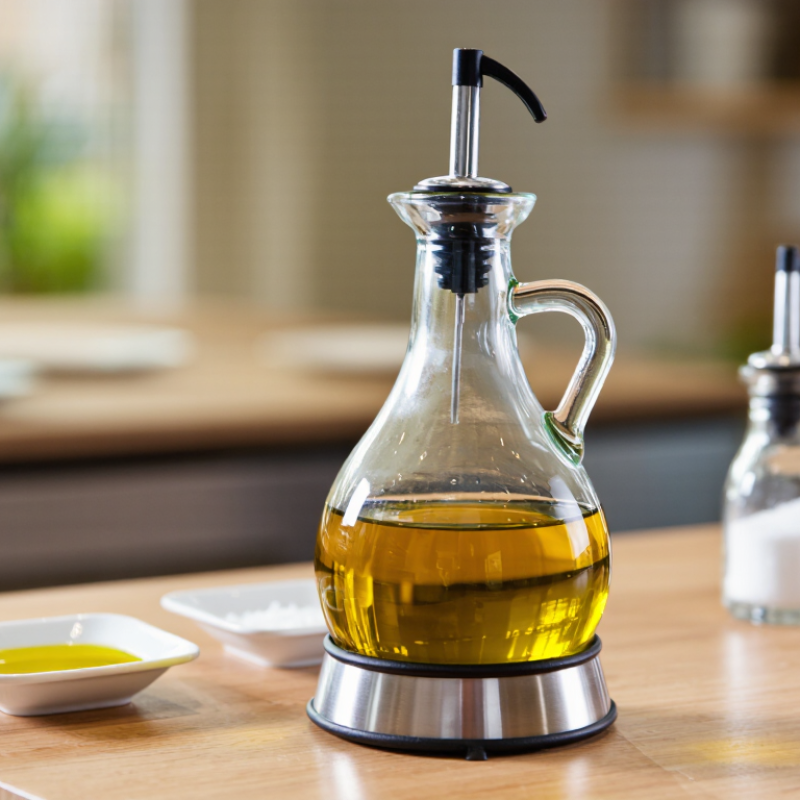
What Defines a Glass Olive Oil Dispenser?
A glass olive oil dispenser is a reusable container designed to store and pour oil with control. Its main parts are a glass body, a neck, and a fitted spout or pourer. Some models include a cap to limit dust exposure between uses. Clear glass makes the oil level easy to check, while tinted glass can reduce light exposure. The choice depends on where the dispenser will sit. On a bright counter, appearance is not the only concern.
For a restaurant, café, or shop, a useful dispenser should feel stable when filled and pour without sudden splashes. A narrow spout helps guide oil onto bread or into a pan; a removable pourer makes cleaning easier. Small details matter. Look for food-contact materials and smooth surfaces that can be washed thoroughly. In daily use, staff also need to refill the bottle without spilling oil around its neck. Glass is nonporous and generally resists lingering odors, but it can break if dropped. And clear glass may look elegant, yet it offers less protection from light than a darker bottle. A good design balances visibility, handling, cleaning, and storage—not just shelf appeal.
Why Choose a Glass Olive Oil Dispenser for Your Business?
A glass olive oil dispenser is a reusable container designed to store and pour oil. Clear glass makes the oil level easy to see; dark or opaque glass can help reduce light exposure.
Example dispenser capacities. Serving estimates use 15 mL per serving and are rounded down.
How Glass Helps Preserve Olive Oil Quality
In a restaurant, a glass olive oil dispenser lets staff see the oil’s color and remaining level at a glance. Glass is nonporous and generally does not absorb oil or retain strong odors, which helps keep the container neutral between uses. A clean bottle matters. Wash it thoroughly, rinse away detergent, and let it dry completely before refilling. Even a little leftover water can affect the oil.
Light is the catch. Clear glass displays the oil beautifully, but it also allows light to reach it, which may gradually dull its flavor. Dark or opaque glass offers better protection, especially on a counter near a window. Keep dispensers away from heat, too. A snug cap helps limit air exposure, though repeated pouring still brings the oil into contact with air. Glass is helpful, not magic. Smaller dispensers may suit busy tables because they hold less oil for longer periods. That means more refills, and more cleaning than some teams expect. Pay attention to how quickly each bottle is used, rather than filling every dispenser to the brim.
Why Choose a Glass Olive Oil Dispenser for Your Business? — How Glass Helps Preserve Olive Oil Quality
| Business Consideration |
How Glass Helps |
Practical Benefit |
| Material interaction |
Glass is generally non-reactive with food and does not readily absorb olive oil or its aromas. |
Helps keep the oil’s taste and aroma from being affected by the dispenser material. |
| Light exposure |
Dark or opaque glass can reduce the amount of light reaching the oil. Clear glass provides less protection from light. |
Choose dark glass for storage or display areas exposed to light; keep any dispenser away from direct sunlight. |
| Oxidation control |
Glass itself does not prevent oxidation. A well-fitted closure and limiting air exposure are also important. |
Select a dispenser with a suitable stopper or pourer, and close it between uses to help protect freshness. |
| Cleaning and reuse |
Glass is washable and can be reused when it is cleaned and dried thoroughly before refilling. |
Supports repeat use in restaurants and hospitality settings; regular cleaning helps avoid residue and stale aromas. |
| Product visibility |
Clear glass makes the oil’s color and fill level visible. Dark glass offers less visibility but better light shielding. |
Choose the style that best balances presentation, stock checks, and light protection for your service environment. |
| Handling and service |
Glass is rigid and keeps its shape during use, but it can break if dropped or knocked against a hard surface. |
Use stable dispensers, handle them carefully, and consider the needs of busy tables or self-service areas. |
| Storage practices |
Glass can hold olive oil, but the container alone cannot maintain quality if the oil is exposed to heat, light, or air. |
Store refills in a cool, dark place, replenish dispensers as needed, and follow the oil supplier’s storage guidance. |
Business Benefits of Glass Dispensers
A glass olive oil dispenser makes the product visible at the table and on the shelf. Customers can see the oil’s color and remaining level without opening the bottle. That small detail can make refilling easier during a busy service. It also helps staff notice when a dispenser needs cleaning. Clear glass keeps the focus on the oil, rather than on decorative packaging. A useful detail.
For restaurants and food retailers, glass can support a clean, consistent presentation across tables or tasting stations. It is generally non-reactive, so it is a practical choice for storing olive oil without adding unwanted flavors. Smooth surfaces are also straightforward to wash, though narrow necks may need a suitable brush. Glass is not magic. It can break if dropped, and frequent handling may make sturdier alternatives more practical in some settings. Businesses should consider dispenser shape, grip, pour control, and replacement needs before ordering in quantity. A well-designed spout can help reduce drips, but staff still need to wipe the rim and keep the bottle properly closed between uses. The best dispenser is the one your team can clean, refill, and handle reliably every day.
Design Features That Support Daily Commercial Use
In a busy kitchen, an olive oil dispenser may pass between cooks, servers, and prep stations dozens of times a day. Glass makes the oil level easy to check, so staff can refill before service slows. Tinted glass can also limit light exposure, while still showing how much oil remains. The shape matters, too. A broad base is less likely to tip when set down beside a cutting board.
A narrow neck and well-fitted pourer help control portions over salads, pans, or bread plates. Look for a spout that pours smoothly without leaving a steady trail down the bottle. Small details matter. A comfortable grip is useful when hands are damp, though very heavy glass can feel tiring during repeated service. Test the filled dispenser before choosing a size for the station.
Cleaning and refilling should be straightforward. A wide opening makes it easier to reach inside, while a removable pourer can simplify washing. Staff should follow the maker’s care instructions and let all parts dry fully before refilling. No dispenser solves every service problem. Glass can break if dropped, and oil residue may collect around the spout, so regular inspection is still necessary. A practical design supports routine work; it does not replace careful handling.
How to Select and Maintain a Glass Dispenser
Selecting a glass olive oil dispenser begins with the way your team serves. Choose food-contact glass with a secure closure and a removable pourer. Amber or dark glass limits light exposure; clear glass looks attractive but should stay away from sunny windows and hot equipment. Match capacity to daily use so oil does not sit in the bottle for too long. Small details matter.
The U.S. EPA’s Advancing Sustainable Materials Management: Facts and Figures 2018 reports that 31.3% of glass containers and packaging were recycled in the United States. This figure covers packaging broadly, not restaurant dispensers, so it is a useful materials benchmark rather than a product-specific result. A reusable dispenser can reduce single-use packaging, but only if staff clean and refill it consistently.
Wash the bottle and pourer between refills, then let every part dry completely. Water left inside is easy to miss. Do not simply top up old oil; residue can affect freshness and make cleaning harder. Check the neck and base for chips, and replace damaged glass. Check it weekly. A darker bottle helps, but it is not magic: a crowded counter can still expose oil to heat, spills, and long storage times.
Conclusion
A Glass Olive Oil Dispenser is a practical container designed to store and pour olive oil with greater control than a bottle with a wide opening. Its glass body lets staff see the oil level and offers a clean, reusable option for restaurants, cafés, and food businesses. When kept away from heat and direct sunlight, glass can help protect the oil’s flavor and aroma by providing a stable, non-reactive storage surface.
For commercial use, a dispenser can support tidy service, consistent portions, and an attractive table or counter presentation. Useful features include a comfortable grip, a steady base, a well-fitted stopper, and a spout that pours smoothly while helping limit drips. To choose one, consider its capacity, ease of filling and cleaning, durability, and suitability for the pace of daily service. Regular washing and thorough drying help keep the dispenser clean and ready for use.
 Chinagama
