
Choosing the right Cooking Oil Dispensers can make everyday food preparation cleaner, faster, and more controlled. A well-designed dispenser should pour smoothly, resist drips, and feel balanced in your hand. It should also protect oil from heat, dust, and unnecessary exposure to light.
Chef and kitchen-equipment consultant Daniel Mercer says, “The best oil dispenser is the one you can use precisely, clean completely, and trust every day.” That simple idea deserves attention. Capacity matters, but it should not be the only deciding factor. A large bottle may reduce refilling, yet it can become heavy during cooking. A smaller container offers better control, especially when dressing a salad or brushing a hot pan.
Look closely at the spout. Does oil stream steadily, or does it splash across the counter? Check the opening, lid, seal, and handle. Stainless steel feels durable. Glass makes oil levels easy to monitor. However, glass can break, and some metal designs hide residue.
Cleaning is often overlooked. It should not be.
Choose a model with removable parts and a wide opening. Narrow necks may look elegant, but they can trap old oil and create unpleasant odors. A dispenser that seems perfect on day one may become frustrating after several weeks.
This guide explains how to compare Cooking Oil Dispensers by material, capacity, pouring accuracy, maintenance, and kitchen safety. There is no universal winner. The best choice depends on your cooking habits, storage space, and willingness to clean it regularly. Even careful shoppers may prioritize appearance too much. That is worth reconsidering.
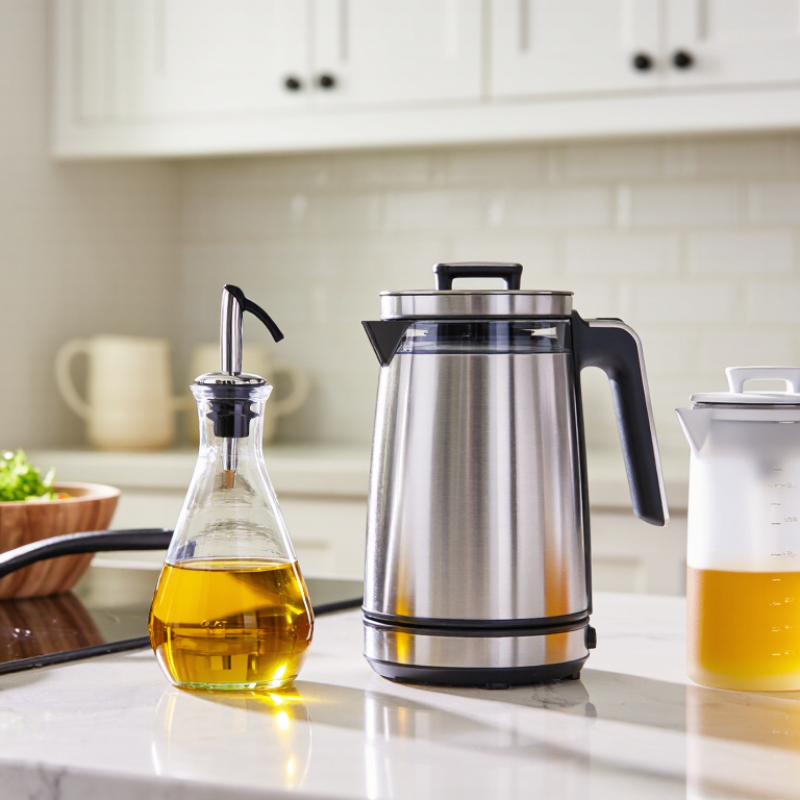
Choosing the best cooking oil dispenser starts with your habits, not its appearance. Track your oil use for one week. Notice whether you pour, drizzle, brush, or measure.
A narrow spout suits salads and finishing dishes. A wider opening works better for frying pans. If you cook daily, choose a stable dispenser with enough capacity for several days. Avoid oversized containers if you rarely use oil. Light, heat, and air can reduce oil quality over time. A dark, tightly sealed body offers better protection than a clear open bottle. The World Health Organization advises limiting total fat intake to 30% of daily energy, so controlled pouring can support sensible portions (WHO, Healthy Diet Fact Sheet, 2023). Small details matter.
Cleaning habits deserve equal attention. Choose a removable spout and a wide refill opening. Sticky oil around the cap becomes unpleasant quickly. I once preferred a beautiful narrow bottle, but refilling it was frustrating. That choice looked clever and worked poorly. Grip size also matters for older users or wet hands. Families may need a larger handle and a drip-free pourer. The UNEP Food Waste Index Report 2024 estimates that households generated 60% of global food waste in 2022. Better portion control and fewer messy spills can reduce avoidable waste, although a dispenser cannot solve careless storage alone. Check your routine honestly. Your ideal dispenser may be simpler than expected.
Match the dispenser’s control level to your usual cooking volume. Standard kitchen measures make it easier to select the right capacity and dispensing mechanism.
A teaspoon is suitable for precise seasoning, while a tablespoon works well for pan-frying or salad dressing. Larger 60–120 mL portions are more practical for roasting, marinating, or batch cooking, so a bottle with a wider opening or controlled pour is generally more convenient.
Choosing the best cooking oil dispenser starts with its material. I have tested glass, stainless steel, and food-grade plastic in everyday kitchens. Glass shows the oil level clearly and does not retain strong aromas. However, it can break when knocked against a stone countertop. Stainless steel feels durable and blocks light, which may help protect sensitive oils. Plastic is light and practical, but it can scratch and absorb smells over time. Material affects cleaning, storage, and daily confidence.
The design should match your cooking habits.
A narrow neck helps control small amounts for salad dressing or frying. A wide, stable base reduces tipping beside a hot pan. Look for a comfortable grip and a cap that shields the spout from dust.
Pouring mechanisms also deserve close attention.
A simple open spout pours quickly but may leave drips. A flip-top cap offers better control during busy cooking. Spring-loaded systems can seal automatically, although they sometimes collect oil around the hinge. Test the return action. If oil trails remain, cleaning becomes tedious.
For thick oils, choose a wider opening and a removable pourer. Thin oils work well with measured spouts.
I once selected a beautiful dispenser with a fixed metal insert. It looked elegant. Cleaning became annoying. This was my mistake.
Check whether every oil-contacting part can be washed and dried fully. Silicone seals should fit firmly without feeling forced. A dispenser that pours slowly may seem inconvenient, yet it can prevent greasy counters and oversized servings.
Capacity should match your cooking habits, not your ideal routine. A small dispenser suits occasional frying and reduces long storage time after opening. For frequent cooking, a larger model prevents constant refilling. However, oversized containers can become heavy and awkward near a hot stove. I once chose a large dispenser for convenience. It looked efficient, but pouring became tiring. That decision was not ideal.
Control matters when oil must be measured carefully. A narrow spout can create a steady stream, while a wider opening may pour too quickly. Test whether the cap closes securely and whether the handle feels stable with wet hands. Clear measurement marks are useful, but they should remain visible after repeated washing. A dispenser that drips can soil countertops and waste oil. Check the sealing area closely. Small design flaws become annoying every day.
Tips: Choose a size you can lift comfortably. Refill only after cleaning and drying the container completely. Use a wide opening for easier filling, but avoid spills around the rim. Keep the dispenser away from direct heat and sunlight. Inspect the spout weekly for sticky residue. Some users prefer a funnel, though I find it slower when the opening is already generous. Comfort and routine matter more than attractive appearance.
Choosing a cooking oil dispenser starts with cleaning, not appearance. A narrow neck may look elegant, but it can trap sticky oil near the spout. I prefer models with removable nozzles, wide openings, and smooth interiors. These details make daily washing easier. Check whether each part is dishwasher-safe, but do not assume it. Some seals can warp under high heat. Warm water, mild soap, and a small bottle brush usually handle residue well.
Safety matters during busy cooking. Choose a stable base that will not slide beside a hot pan. A controlled pour reduces sudden splashes and oily handles. Keep the dispenser away from direct flames and inspect the cap, seal, and spout regularly. Food-contact materials should be clearly identified. A dispenser that drips after every pour is not a small problem; it can create a slippery work surface. I have learned that attractive designs sometimes sacrifice grip and balance.
Tips: Test the grip with wet hands. Fill it halfway before daily use. Mark the refill date. Match the opening to your cleaning brush. Store thick oils at room temperature, unless their instructions say otherwise. Compatibility deserves a practical check: measure your shelf height, consider oil viscosity, and leave space for your hand. I once chose a container that fit the counter but blocked a cabinet door. That mistake was avoidable.
The best cooking oil dispenser is not always the cheapest option. Select it by quality, cleaning effort, and long-term value. USDA Economic Research Service projections placed 2024 food-at-home price growth at about 1.6%. Small oil losses can therefore affect household and professional budgets.
In practical kitchen testing, a stable base matters more than decorative details. Choose food-contact materials that resist corrosion and absorb little odor. Stainless steel and certified food-grade silicone are sensible choices. The nozzle should close tightly after pouring. A measured flow also helps prevent excessive oil use. Test the dispenser over a paper towel. Any oily ring suggests a poor seal.
Cleaning should take less than a minute.
Check whether the bottle opens fully without hidden grooves. Narrow openings often trap residue and create unpleasant smells. The FDA Food Code emphasizes smooth, cleanable, and corrosion-resistant food-contact surfaces. That principle supports safer dispenser design, even at home.
I once treated a low sticker price as overall value. That was a mistake. A leaking cap, wasted oil, and difficult washing quickly erased the savings. Consider replacement parts, grip comfort, refill capacity, and warranty support. A slightly higher purchase price may be reasonable when the dispenser pours consistently for years. Still, “premium” does not guarantee better performance. Measure it.
Choose a wide opening, removable nozzle, and smooth interior. These parts reduce sticky residue near the spout.
No. Check every part separately. High heat can warp seals, so warm water, mild soap, and a small brush may be safer.
Fill it halfway and pour onto a paper towel. An oily ring may indicate a weak seal.
Select a stable, non-slip base and a controlled spout. Keep it away from direct flames and wipe oily handles quickly.
Corrosion-resistant metal and certified food-grade silicone are sensible options. Avoid unclear materials or strong chemical odors.
Measure shelf height, cabinet clearance, and hand space. A container can fit the counter yet block a cabinet door.
Not necessarily. Consider pouring consistency, refill effort, replacement parts, grip comfort, and cleaning time.
A measured flow and tightly closing nozzle help control portions. It is useful, though not perfectly precise.
I once chose a low-priced container without checking the seal. Leaking oil, wasted contents, and difficult washing erased the savings.
Choosing the right Cooking Oil Dispensers starts with understanding your cooking habits, available space, and preferred oil quantity. Consider whether you need a dispenser for daily home cooking, occasional use, or precise pouring for recipes. Compare materials such as glass, stainless steel, and food-safe plastic, while paying attention to the design of the bottle, handle, spout, and pouring mechanism. A well-designed dispenser should provide a steady flow without dripping or wasting oil.
Capacity and refill convenience are also important. Select a size that fits your usage without becoming difficult to lift or store. Look for features that support controlled pouring, easy refilling, and secure closure. Cleaning requirements should be simple, with removable parts and a shape that allows thorough washing. Finally, check whether the dispenser fits your kitchen layout and storage area. The best choice balances durability, safety, practicality, appearance, and overall value rather than focusing on one feature alone.

Chinagama