
How to Choose a Manual Coffee Bean Grinder in 2026?

Time:2026-11-16 Author:Charlotte
0%

Choosing a Manual Coffee Bean Grinder in 2026 means balancing grind quality, effort, durability, and price—not chasing the most impressive specification. For pour-over, a consistent medium grind can help water flow evenly; espresso requires finer adjustments and careful dialing-in. Burr design and alignment affect particle consistency, while a steady handle and comfortable grip matter during daily use. Small details matter. Check whether adjustment settings are clear, the catch cup stays secure, and the grinder can be opened for cleaning. Grounds caught beneath a burr may affect the next cup, so maintenance deserves attention.

This guide explains how to compare burr materials, adjustment ranges, capacity, portability, and ease of cleaning. It also considers practical trade-offs: a compact grinder saves bag space but may hold fewer beans, while a larger model can take more effort to carry. Look for specifications supported by clear product information, and treat broad claims about speed or consistency with care. No hand grinder is perfect. Even a well-made model may feel slow when grinding for several cups, and the best choice depends on your brewing method, budget, and routine. A brief pause to consider those needs can prevent an attractive purchase from becoming an awkward fit on your counter.
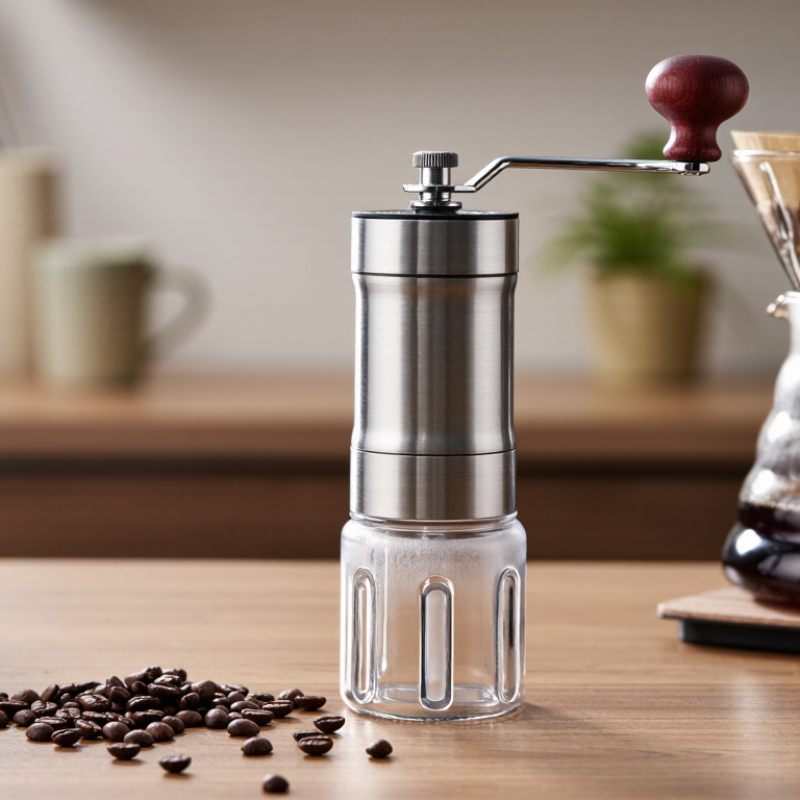
How to Choose a Manual Coffee Bean Grinder in 2026?

Identify Your Brewing Methods and Grinding Needs

How to Choose a Manual Coffee Bean Grinder in 2026?

Identify Your Brewing Methods and Grinding Needs

Start with the coffee you actually make. Pour-over usually needs an even medium grind; French press works better with a coarser texture. Espresso requires finer, precise adjustments, and not every hand grinder can manage them comfortably. Think about your routine, too: grinding enough beans for one cup takes less effort than preparing a large pot. That detail is easy to overlook.

The Specialty Coffee Association’s Golden Cup recommendations place brewed coffee at 1.15–1.35% total dissolved solids and 18–22% extraction yield. These are brewing targets, not grinder specifications, but they show why particle consistency matters: uneven grounds can extract at different rates. Choose a grinder with stable burrs and clear adjustment steps suited to your brew method. A wide adjustment range sounds useful, yet it may not offer the fine control espresso needs. No chart solves every cup; bean age and pouring technique still change the result.

Tips: Test a small dose before committing. Look for grounds that feel even between your fingers, then adjust one step at a time. If the handle catches or your wrist tires quickly, that grinder may not fit your daily routine.

Compare Burr Types, Materials, and Grind Settings

How to Choose a Manual Coffee Bean Grinder in 2026?

Burr shape affects particle consistency, but no design wins for every brew. Conical burrs are often compact and forgiving; flat burrs can produce a more uniform particle bed when well aligned. In either case, check for a stable axle and little side-to-side movement. A wobbly burr can make the finest setting uneven. That detail matters more than a dramatic product description.

Steel burrs are tough and easy to sharpen, while ceramic burrs resist corrosion but can chip if dropped. Neither material guarantees better flavor. Look for clear, repeatable grind adjustments, especially if you switch between espresso and pour-over. Click counts are not standardized, so record your own settings and test each change with the same beans and water. Small changes matter. I would not trust a “perfect” setting number across different grinders.

The Specialty Coffee Association’s brewing-control guidance places filter coffee around 18–22% extraction yield and 1.15–1.35% total dissolved solids. These figures are useful targets, not a promise that every cup will taste good. If coffee tastes sharp, adjust finer; if it tastes dry or bitter, try coarser. Change one step at a time, then taste. A simple notebook helps reveal patterns. Not a perfect rule.

How to Choose a Manual Coffee Bean Grinder in 2026

Compare burr types, materials, and grind settings by checking whether a grinder can reach the particle-size range your brewing method needs.

How to read this chart: The ranges are approximate guides in micrometers (μm), not fixed standards; recipes, beans, and grinders affect the ideal grind. Conical and flat describe burr shape, while steel and ceramic describe burr material. Whichever you choose, check that the grinder’s adjustment range—and the size of each adjustment step—suits your brewing method.

Assess Capacity, Portability, and Ease of Use

How to Choose a Manual Coffee Bean Grinder in 2026?

Assess Capacity, Portability, and Ease of Use

Choose capacity around your usual brew size. A small hopper may suit one morning cup, but repeated refills become tedious when serving guests. Check the usable capacity, not just the grinder’s overall dimensions. If you brew outdoors, consider how easily it fits beside a mug and a small bag of beans. A lighter grinder travels well, though very compact models can feel cramped during longer grinding sessions.

Tips: Turn the handle before buying, if possible. Notice whether it catches or wobbles. Check that the adjustment dial is clear and easy to reset. A few extra seconds spent on these details can prevent daily frustration.

Ease of use matters more than a long feature list. Look for a handle with a comfortable grip and a body that stays steady on a counter. Grinding should feel controlled, not like wrestling a jar. A removable catch cup can make transferring grounds simpler, while accessible parts help with routine cleaning. Consider how you’ll use it when tired or in a hurry; tiny adjustments can be surprisingly fiddly. There is no perfect balance: more capacity often means more bulk, and a travel-friendly size may require extra batches. Test your priorities against your actual routine.

Evaluate Build Quality, Maintenance, and Price

How to Choose a Manual Coffee Bean Grinder in 2026?

A sturdy hand grinder should feel aligned, not merely heavy. Turn the handle slowly and notice whether it wobbles or catches. Check for a solid axle, securely fitted burrs, and a stable adjustment mechanism. Loose parts can cause uneven grinding. The Specialty Coffee Association’s Brewing Control Chart shows how grind size affects extraction, making consistent adjustment more than a convenience. A heavier body may feel reassuring, but weight alone proves little.

Maintenance affects value over time. Look for burrs and a grounds cup that are easy to access and clean. A small brush should reach coffee dust around the burrs without forcing you to dismantle the whole grinder. The National Coffee Data Trends 2024 report found that 67% of U.S. adults drank coffee the previous day. That signals a frequent coffee habit, not grinder durability, but it makes simple upkeep worth considering. Price is only part of the cost; replacement parts and cleaning effort matter too. It is easy to overvalue a polished finish.

Tips: Compare the grinder’s adjustment range, spare-part availability, and cleaning instructions before buying. If possible, test the handle. A brief trial can reveal more than a product photo.

Match Grinder Features to Your Coffee Routine

Choose for the coffee you make most often, not the grinder with the most settings. The National Coffee Association’s Spring 2024 National Coffee Data Trends report found that 67% of U.S. adults had coffee in the past day. That makes weekday convenience matter. For one morning mug, look for quick adjustments, a steady handle, and a catch cup that empties without scattering grounds across the counter. Brewing espresso and pour-over? A wider adjustment range helps, but clear markings make switching easier. Small details count.

The Specialty Coffee Association’s Brewing Control Chart places 18–22% extraction yield in its reference zone. Grind size can help move a brew toward that range, alongside dose and brewing time. For a French press, coarser settings and consistent adjustment are useful; for espresso, finer steps give more control. A larger hopper or chamber may suit several daily cups, while a compact grinder is easier to pack. I still find it easy to overvalue adjustment counts. A grinder can look precise and still feel awkward at 6 a.m. Try the handle, check how easily the setting changes, and consider how much cleanup your routine can tolerate.

How to Choose a Manual Coffee Bean Grinder in 2026? - Match Grinder Features to Your Coffee Routine
Coffee Routine Features to Look For Best-Suited Brew Methods Practical Advantages Potential Trade-Offs Before You Buy
Occasional coffee at home Conical burrs, straightforward adjustment, comfortable hand crank, sturdy body French press, pour-over, drip coffee Simple operation and no power outlet required; a good fit for modest, occasional use Grinding can take longer, and adjustment steps may be too broad for precise espresso dialing-in Check that the adjustment mechanism is easy to understand and that the handle stores securely
Daily pour-over or drip coffee Consistent burr alignment, repeatable adjustment settings, easy-to-clean grounds chamber Pour-over, batch brew, automatic drip Repeatable settings make it easier to recreate a preferred cup from day to day Manual grinding still requires time and effort, especially when preparing multiple servings Look for clear grind-setting references and a capacity that suits the amount you usually brew
Travel, camping, or a small kitchen Compact dimensions, low weight, a folding or detachable handle, durable construction Pour-over, immersion brewing, AeroPress-style brewing Portable and usable without electricity; easy to pack when the handle can be secured Smaller grounds capacity may mean grinding in more than one batch; compact parts can be easier to misplace Compare the grinder’s packed size and weight, and check whether replacement parts are available
Espresso at home Fine-grind capability, small and repeatable adjustment increments, stable burr assembly Espresso, with adjustment range depending on the grinder and espresso machine Fine adjustment can help tune grind size as beans, dose, and extraction needs change Fine grinding usually takes more effort; some manual grinders do not adjust finely enough for espresso Confirm that the grinder is explicitly designed for espresso-level adjustment, especially for unpressurized baskets
Several cups in one session Larger bean and grounds capacity, long comfortable handle, easy loading French press, pour-over, drip coffee More convenient when grinding for multiple people or a larger brew A larger grinder may be heavier and less convenient to carry; capacity does not guarantee faster grinding Match the stated capacity to your usual dose, and check whether the grounds chamber is easy to empty
Quiet, mindful morning routine Smooth-running burrs, secure handle connection, comfortable grip, low-vibration construction Pour-over, French press, drip coffee Manual operation avoids the motor noise of an electric grinder Manual grinders still make some sound, and grinding requires sustained hand movement If possible, test the crank motion and grip; comfort matters more during frequent use
Easy cleaning and long-term ownership Accessible burr chamber, tool-free disassembly where practical, replaceable wear parts Any method; especially useful for frequent use or switching between beans Routine cleaning can help prevent stale coffee residue from affecting fresh grounds Some designs are harder to reassemble or may require careful handling of small components Review the cleaning instructions and confirm how the burrs and adjustment parts are maintained
Selection tip: Choose for your most frequent brew method and typical serving size. Manual grinder capacity, adjustment range, effort, and portability vary by model, so verify the manufacturer’s specifications before purchasing.

FAQS

Are conical or flat burrs better for manual coffee grinders?

Neither design suits every brew. Conical burrs are often compact and forgiving, while aligned flat burrs can produce a more uniform particle bed.

Should I choose steel or ceramic burrs?

Steel burrs are durable and can be sharpened. Ceramic resists corrosion but may chip if dropped. Neither guarantees better flavor.

How can I check whether a grinder is well built?

Turn the handle slowly and check for wobble or catching. A stable axle and securely fitted burrs matter more than a heavy body.

Do grind-setting numbers work across different grinders?

No. Click counts are not standardized. Record your own settings and test changes using the same beans and water.

What should I change if my coffee tastes sharp or bitter?

Try a finer setting for sharp coffee and a coarser one for dry or bitter coffee. Change one step at a time, then taste.

What extraction range can I use as a starting point for filter coffee?

A useful target is 18–22% extraction yield and 1.15–1.35% dissolved solids. These figures cannot promise a pleasant cup.

How can I tell if cleaning will be difficult?

Check whether the burrs and grounds cup are easy to reach. A small brush should clear coffee dust without full disassembly.

Does a heavier grinder mean better quality?

Not necessarily. Weight can feel reassuring, but it proves little. I still find it easy to overvalue a polished finish.

What should I compare before buying?

Check the adjustment range, spare-part availability, and cleaning instructions. If possible, test the handle. A brief trial can reveal a wobble that photos hide.

Conclusion

Choosing a Manual Coffee Bean Grinder in 2026 starts with understanding how you brew and what kind of grind each method requires. Consider whether you need fine, consistent grounds for espresso or a coarser setting for immersion brewing, then compare burr designs, materials, and adjustment options. A grinder that offers precise, repeatable settings can make it easier to explore different brewing styles and achieve a more balanced cup.

Next, think about capacity, portability, and how comfortable the grinder is to use, especially if you make coffee daily or travel with your equipment. Durable construction and straightforward maintenance can help it remain reliable over time, while the price should reflect the features you will actually use. By matching grind range, handling, capacity, and upkeep to your routine, you can choose a grinder that fits your needs without paying for unnecessary extras.

Charlotte

Charlotte

Charlotte is a seasoned marketing professional with a deep understanding of the company's portfolio and a passion for elevating its presence in the market. With a keen eye for detail and a commitment to excellence, she ensures that our professional blog is regularly updated with insightful articles......