
How to Choose a Handheld Coffee Grinder in 2026?

Time:2026-09-28 Author:Ethan
0%

Choosing a Handheld Coffee Grinder in 2026 is less about finding the most expensive model and more about matching its design to your daily coffee. A grinder that works beautifully for a slow weekend pour-over may feel tiring when you need a quick espresso before work. James Hoffmann, a respected coffee educator, has often emphasized the grinder’s central role in brewing. A practical way to express that principle is: “Consistent grinding matters more than a polished-looking grinder.” Treat this as a guiding idea, not a substitute for checking a model’s specifications and independent reviews.

Start with the coffee you make most. Espresso usually calls for finer, more precise adjustment; French press needs a coarser range. Look closely at the adjustment steps, burr material, handle length, and how comfortably the body sits in your hand. A metal catch cup can feel reassuring, but its lid may be awkward with cold fingers. Small details count.

Then consider portability, cleaning, warranty support, and replacement parts. A compact grinder should fit your travel mug or bag without spilling grounds into the zipper seam. Check whether its burrs can be reached without special tools. A low price can be tempting, but limited adjustment or uneven grinding may frustrate you later. I would not assume that every new 2026 release is an upgrade; sometimes familiar designs simply get shinier. This guide will compare the features that shape daily use, explain the trade-offs, and help you choose a Handheld Coffee Grinder that suits your routine and budget.
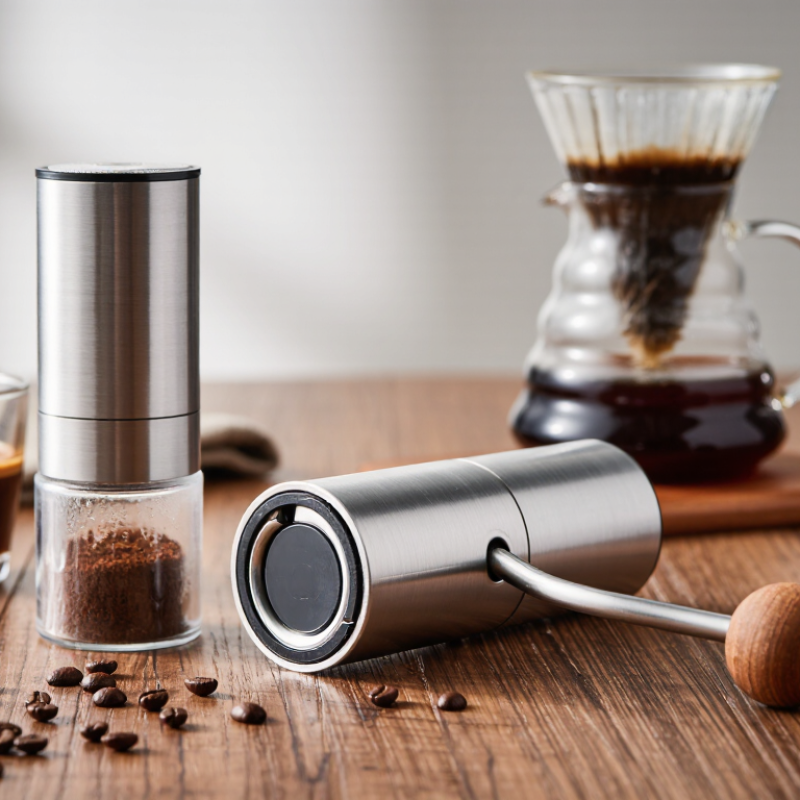
How to Choose a Handheld Coffee Grinder in 2026?

Understanding Handheld Coffee Grinders and Their Main Types

Handheld grinders are compact mills that turn whole beans into grounds without electricity. Their main types differ by burr shape, adjustment mechanism, and how much effort they require. Ceramic burrs resist corrosion and often cost less, while steel burrs are typically easier to machine precisely. Neither material guarantees a better cup; burr alignment and consistent particle size matter too.

Most models use conical burrs, which fit into a narrow body and suit travel or small kitchens. Flat burr designs are less common in handheld grinders and may need more turning effort. Stepped adjustment clicks between set positions, making repeatable changes easier. Stepless adjustment allows finer control, but can feel fiddly. That matters.

The Specialty Coffee Association’s Brewing Control Chart places brewed coffee’s extraction yield at 18–22% and beverage strength at 1.15–1.35% for its Golden Cup range. These are brewing targets, not grinder test scores, but they show why repeatable grind settings are useful. For pour-over, a coarser, even grind can help water pass steadily; espresso usually needs much finer adjustment. In practice, bean freshness and pouring technique also shift results. Specs can mislead. A grinder that feels smooth with a small dose may become tiring after several cups, so consider handle length, grip, capacity, and how easily grounds can be cleaned out.

Identifying Your Brewing Methods and Grinding Needs

Choose a grinder around the coffee you actually brew, not an idealized routine. For pour-over, look for repeatable medium settings and an adjustment dial that stays put. A consistent grind helps water pass evenly, while too many fine particles can make a cup taste muddy. Count the turns needed for your usual dose. Slow cranking matters on rushed mornings.

French press usually calls for a coarser setting, so check that the grinder has a broad, easy-to-repeat range. AeroPress recipes vary: a short steep may suit a finer grind, while longer immersion often works with a coarser one. Your recipe matters. If you switch methods often, clear markings can save time, though they will not guarantee the same result with every coffee.

Espresso demands fine adjustment and consistent grinding. A hand grinder may manage it, but repeated shots can tire your wrist. Consider dose capacity, grip comfort, and whether you can return to a setting reliably. I still misjudge it. For travel, a narrow body packs easily, but a small catch cup may mean extra transfers. Test your usual dose, if possible, and notice the effort and cleanup. The smallest grinder is not always the easiest to use.

Comparing Burr Design, Grind Settings, and Adjustment Systems

A handheld grinder should feel steady in the hand, but burr alignment matters more than a polished exterior. Conical burrs are common in compact models and can produce a useful range for pour-over and immersion brewing. Burr size and sharpness affect how evenly beans break apart; uneven particles may taste both sour and bitter. Flat burr designs also exist, though they can make a grinder wider or harder to turn. I would check for burr wobble, not just read claims about precision.

Grind settings should cover your actual brewing habits. A very fine setting may suit espresso, while a coarser range works better for a French press. More clicks do not automatically mean better control. The important detail is the distance between settings: large jumps can make dialing in a recipe frustrating. Tiny adjustments help, but they are less useful if the grinder is difficult to reset. Test the dial with dry fingers. It can feel different when oily beans leave residue.

Adjustment systems may be internal, with a ring beneath the burr, or external, with a dial on the body. External controls are easier to change between brews, but they can shift if the detents feel loose. Internal systems are often protected from accidental movement, though changing settings may require removing the catch cup. Keep notes on click counts for each brew method. I still find that counting clicks is imperfect; burr alignment and bean age can change the result. A little inconsistency is normal.

How to Choose a Handheld Coffee Grinder in 2026? - Comparing Burr Design, Grind Settings, and Adjustment Systems

Configuration Burr Design Grind Settings Adjustment System Practical Advantages Trade-Offs and Best Fit
Steel conical burr with internal stepped adjustment Two conical burrs grind the beans; the cutting geometry and alignment affect the resulting particle distribution. Click-based steps. The usable range and number of clicks vary by grinder. Adjustment is made inside the grinder, commonly by turning a nut or dial beneath the burr assembly. Compact layout and repeatable settings make this a practical general-purpose configuration. Changing settings may require removing the catch cup or accessing the burr area. A click is not a universal measure of grind fineness.
Steel conical burr with external stepped adjustment Conical steel burrs; steel is commonly used for its toughness and ability to hold sharp cutting edges. Click-based steps, with the available range determined by the burr geometry and adjustment design. A ring or dial on the outside of the grinder changes the burr spacing without opening the adjustment assembly. Settings are easy to reach and repeat, which is useful when switching between brew methods. External rings can be bumped during handling. Check that the scale is clear and settings can be reproduced after cleaning.
Ceramic conical burr with stepped adjustment Conical burrs made from ceramic. Ceramic is hard and wear-resistant, but can be more vulnerable to chipping from impact than steel. Usually arranged as discrete clicks; the number and spacing of settings differ between designs. Most commonly adjusted in steps through an internal nut or dial. A viable option for routine home or travel brewing when the grinder is handled carefully. A hard drop or trapped foreign object may damage a ceramic burr. Material alone does not determine cup quality or grind consistency.
Steel conical burr with stepless adjustment Conical steel burrs paired with a continuously adjustable mechanism. Continuous adjustment rather than fixed clicks allows small changes within the mechanism's usable range. A threaded dial or ring moves the burr position without a fixed step at each setting. Offers fine control for dialing in espresso or making small adjustments between brews. Settings may be harder to record and return to unless the grinder has a clear scale or reference mark.
Flat burr hand grinder Two flat, parallel burrs grind the beans. Handheld versions exist, though this layout is less common in portable grinders. May use stepped or stepless adjustment; burr type does not determine the adjustment method. Depends on the grinder's mechanism and may be internal or external. Can suit users interested in a flat-burr design and willing to consider a less typical handheld format. Check size, crank effort, burr alignment, and replacement-part availability. Flat burrs are not automatically better than conical burrs.

Selection tip: Prioritize consistent adjustment, a useful grind range for your brew method, comfortable cranking, and easy cleaning. Setting counts are not directly comparable across grinders because click spacing and burr geometry differ.

Evaluating Capacity, Portability, Build Quality, and Maintenance

Choosing a hand grinder starts with dose, not advertised bean capacity. The Specialty Coffee Association’s Golden Cup guidance uses about 55 grams of coffee per liter. At that ratio, a 20-gram dose makes roughly 360 milliliters. That is enough for one generous cup, but may frustrate shared brewing. Small capacity can be a feature. It reduces bulk for a commute or overnight trip.

Portability depends on more than weight. Measure the grinder against your bag’s side pocket, then check whether its handle detaches and its grounds container seals securely. A loose lid can turn a tidy travel kit into a pocket of chaff. Stainless steel bodies may resist knocks, while lighter materials ease carrying; neither guarantees a smooth grind. Check burr alignment, handle wobble, and adjustment steps before buying, if possible.

Maintenance is easy to overlook. Look for tool-free access to the burr chamber, a brush-friendly interior, and clearly marked reassembly. Fine grounds cling to threads, especially after oily or very dark beans. The National Coffee Association’s 2024 National Coffee Data Trends report found that 67% of U.S. adults drank coffee the previous day. That figure signals coffee’s routine role, not hand-grinder sales. Choose a design you will actually clean. I would not assume “portable” means durable; seals, hinges, and adjustment rings deserve closer inspection.

Matching a Grinder to Your Budget and Daily Routine

A handheld coffee grinder should fit the way you actually make coffee, not an ideal routine you rarely follow. If you brew one cup before work, look for a grinder that holds enough beans for that serving and adjusts without a struggle. A smooth handle matters. So does a stable grip, especially when the beans are dense and the morning is rushed.

Set your budget around the features you will use. A modest grinder can suit occasional brewing, while frequent use may justify a sturdier body, consistent burr alignment, and easier adjustment. Check whether the grind settings cover your method: a coarse setting for a French press needs a different range from a fine espresso-style grind. More settings are not automatically better. They can add cost without improving your daily cup.

Think about cleanup and portability, too. A compact model is handy for travel, but a tiny bean capacity may mean repeated grinding at home. Removable parts can simplify brushing out old grounds; avoid washing components unless the instructions allow it. A small trade-off. It is tempting to focus on grind quality alone, but comfort and time shape whether you keep using the grinder. Measure your usual dose, consider where you will store it, and choose a tool that feels manageable in your hand. One detail is easy to overlook: a grinder that is slightly slower may still be the better buy if it is pleasant to use every day.

FAQS

What should I consider when choosing a hand grinder for pour-over?

Choose repeatable medium settings and a dial that stays in place. Too many fine particles can make the cup taste muddy. Count the turns for your usual dose.

What grind settings suit French press and AeroPress?

French press usually needs a coarse, easy-to-repeat setting. AeroPress recipes vary: shorter steeping may suit finer grounds, while longer immersion often works with coarser ones. Your recipe matters.

Can a hand grinder work for espresso?

It can, if it offers fine adjustments and consistent grinding. Repeated shots may tire your wrist, so check grip comfort and how reliably you can return to a setting. I still misjudge this.

Do more grind settings always mean better control?

No. Large jumps between settings can make recipe adjustments frustrating. Small steps help only when the grinder is easy to reset.

How much coffee should the grinder hold?

Start with your usual dose, not the advertised capacity. A 20-gram dose makes roughly 360 milliliters at a common brewing ratio. Enough for one generous cup.

What makes a hand grinder travel-friendly?

Check its fit in your bag’s side pocket, whether the handle detaches, and whether the grounds cup seals securely. A loose lid can leave chaff in your pocket.

How can I check build quality before buying?

Look for burr wobble, a loose handle, and adjustment parts that shift. A steel body may resist knocks, but it does not guarantee a smooth grind.

What should I look for when cleaning a grinder?

Tool-free burr access, a brush-friendly interior, and clear reassembly help. Fine grounds cling to threads, especially after oily beans. Cleaning is easy to postpone.

Conclusion

Choosing a Handheld Coffee Grinder in 2026 starts with understanding how manual grinders work and how their designs differ. Consider the brewing methods you use most often, since each may call for a particular grind range and level of consistency. Burr shape, available grind settings, and the adjustment mechanism can affect how easily you achieve the results you want, so compare these features with your everyday brewing needs.

Next, weigh practical details such as capacity, portability, construction, and ease of cleaning. A compact grinder may suit travel, while a larger capacity can be convenient for preparing several cups at home. Think about how often you will use it, how much maintenance you are willing to do, and what fits your budget. The right Handheld Coffee Grinder is one that balances performance and convenience for your routine rather than simply offering the most features.

Ethan

Ethan

Ethan is a seasoned marketing professional with a deep expertise in our company's innovative product line. With a passion for sharing knowledge and insights, he takes the lead in regularly updating our corporate blog, where he explores industry trends, product features, and effective marketing......