
Choosing the China Best Portable Coffee Grinder for Global Buyers? That question deserves more than a low price comparison. A reliable Coffee Grinder Portable should produce consistent grounds, travel easily, and survive repeated daily use.
James Hoffmann, coffee educator and author, has said, “The grinder is more important than the espresso machine.” This view remains practical for international buyers. A compact grinder can shape extraction before brewing begins. Burr alignment, adjustment range, handle comfort, and cup consistency matter more than polished packaging.
Chinese manufacturers now offer many portable models for travelers, retailers, and private-label businesses. Some provide stainless steel burrs, foldable handles, and USB-C charging. Others look impressive but produce uneven particles after several uses. That difference appears clearly in a hand-brewed cup: sharp bitterness, weak aroma, or muddy sediment.
This guide examines materials, grinding performance, portability, battery design, and supplier reliability. It also considers export communication, replacement parts, packaging, and quality control. Those details often decide whether a product succeeds beyond its first shipment.
There is no perfect grinder.
A buyer may prefer a lightweight body, while a café-focused distributor may need stronger burrs and faster output. My own assessment would remain cautious without testing each model with different beans. Hard roasted beans, fine espresso settings, and humid travel conditions can reveal weaknesses quickly. Therefore, the best Coffee Grinder Portable is not simply the smallest or cheapest option. It is the model that delivers repeatable results, honest specifications, and dependable support across real global use.
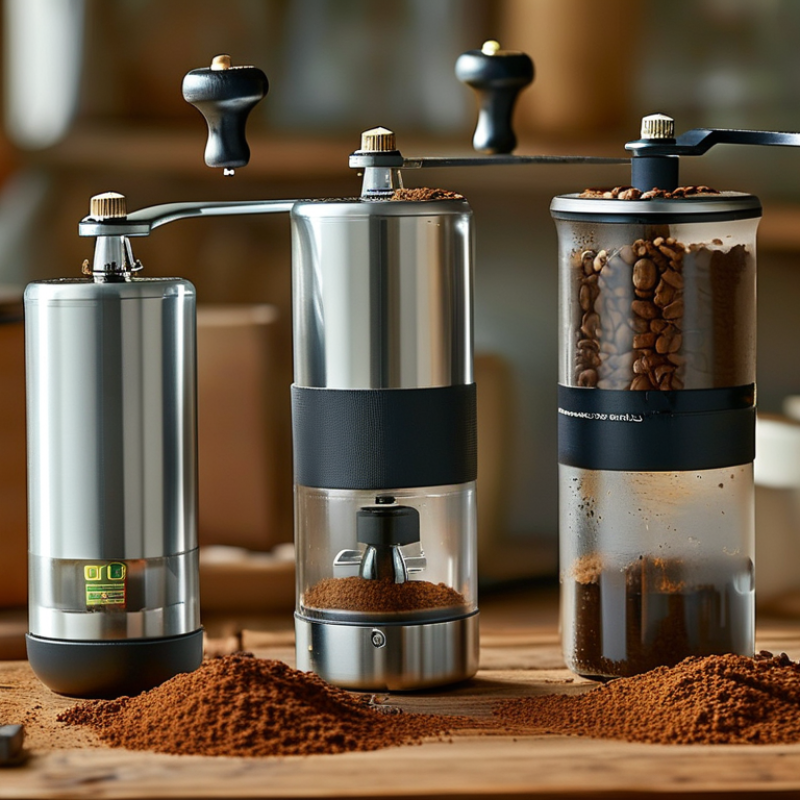
For global buyers, the best portable coffee grinder from China is not simply the smallest or cheapest model. It should produce consistent grounds, travel safely, and remain usable after months of daily grinding. The International Coffee Organization estimated global coffee consumption at about 177.9 million 60-kilogram bags in 2023/24. That scale creates demand for reliable equipment, not attractive specifications alone.
Burr alignment matters most. A sturdy metal burr set, low wobble, and stable bearings help reduce fine dust and uneven particles. The adjustment system should offer clear clicks, while the handle should turn smoothly without sharp resistance. A useful travel grinder may weigh under 700 grams, hold 20 to 30 grams of beans, and fit inside a small backpack pocket. Check the details. Ask for grind-size tests, retention measurements, and repeatability records from actual production batches. ISO 9001 certification can support process control, but it does not prove coffee performance.
Durability also defines quality. Buyers should inspect food-contact materials, coating wear, spare-part availability, and packaging protection around the burr shaft. Portable products face drops, humidity, and careless luggage handling. Factory audits and sample testing are more dependable than catalog claims. I would also question exaggerated “zero retention” statements; some residue is normal. The Specialty Coffee Association emphasizes repeatable brewing variables, yet portability always involves compromises. A lighter body may vibrate more. A stronger burr may increase cost. The best choice is therefore a tested balance of consistency, repairability, weight, and transparent evidence.
Choosing the best portable coffee grinder from China requires more than checking price. Global buyers should compare practical features, not attractive product photos. Burr material matters because hardened steel usually handles daily use better than soft alternatives. Grind adjustment should feel precise, with clear steps for espresso, pour-over, and French press. Consistency is critical. Uneven particles can create bitter and weak flavors in the same cup.
Tips: Ask for grind-size testing, burr specifications, weight, capacity, and cleaning instructions. Check whether replacement burrs and charging accessories are available in your market. For electric models, confirm voltage, plug type, battery capacity, and charging safety. A compact grinder should fit a travel bag without feeling fragile. Look for a stable handle, secure lid, and a grounds container that does not loosen during transport.
My own testing experience suggests that portability often creates compromises. A smaller hopper may improve travel convenience but requires frequent refilling. Lightweight plastic can reduce shipping costs, yet it may wear faster around the threads. I would also inspect the adjustment mechanism after repeated use, because early smoothness can be misleading. Noise is easy to overlook in product listings. It matters in quiet offices and hotel rooms. Buyers should request independent samples, clear inspection records, and realistic delivery terms. Certifications and food-contact documentation should match the destination market, not merely the factory’s domestic requirements. A perfect grinder probably does not exist. The better choice balances consistency, durability, maintenance, and honest after-sales support.
China Best Portable Coffee Grinder for Global Buyers?
How China’s Portable Coffee Grinders Are Designed and Made
China’s portable coffee grinders begin with user problems, not decoration. Engineers study hand size, travel weight, grind adjustment, and cleaning time. A typical body uses aluminum alloy, stainless steel, or reinforced polymer. Ceramic or stainless-steel burrs then break roasted beans into controlled particles. Small details matter. The thread must feel firm without becoming difficult to turn.
The International Coffee Organization estimated global coffee consumption at 177.9 million 60-kilogram bags in 2023/24. That growing demand supports compact brewing equipment for offices, travel, and outdoor use. Factory teams usually create prototypes through CNC machining or injection molding. They test burr alignment, handle strength, noise, and particle consistency. Each batch also needs inspection for burr runout and food-contact safety. Some tolerances still depend on human judgment.
Production is rarely perfect. A grinder may feel smooth during assembly but perform differently after repeated use. Engineers should test it with light, medium, and dark roasted beans. They should also examine dust around the axle and folding handle. Grand View Research identifies convenience and home preparation as important forces in the coffee equipment market. Portable design responds directly to those habits. Yet lighter construction can reduce stability. Buyers should question exaggerated claims about uniform grinding and durability. Real samples, test records, and clear material specifications provide stronger evidence than polished photographs.
| Design / Manufacturing Dimension | Typical Portable Grinder Configuration | Common Technical Data | Why It Matters to Global Buyers | Typical Production Consideration in China |
|---|---|---|---|---|
| Product Format | Manual travel grinder; rechargeable electric grinder; compact corded grinder | Approximate product weight: 0.35–1.10 kg; compact cylindrical or rectangular housing | Weight and pack size affect portability, freight cost, and outdoor usability | Industrial designers normally balance internal capacity, motor size, battery space, and packaging dimensions |
| Grinding Burr | Conical steel burr or ceramic burr | Common burr diameter: approximately 38–48 mm; steel is generally more impact-resistant, while ceramic produces less heat transfer | Burr geometry and diameter influence particle consistency, grinding speed, durability, and heat management | Burr alignment, concentricity, hardness, and surface finishing require incoming inspection and assembly checks |
| Adjustment System | Stepped click adjustment or continuous adjustment ring | Typical design range: coarse settings for French press through fine settings for espresso-style brewing; exact click count varies by burr and mechanism | Repeatable adjustment helps users reproduce brewing results across different markets | Manufacturers validate thread accuracy, detent strength, scale markings, and zero-point consistency |
| Grinding Capacity | Single-dose hopper and removable grounds container | Typical portable capacity: approximately 15–30 g of coffee beans | Capacity should match common brew sizes while keeping the body compact | Food-contact parts are commonly produced from stainless steel, food-grade plastics, or glass, depending on the design |
| Power System | Manual drive, USB rechargeable battery, or AC-powered motor | Rechargeable models commonly use lithium-ion cells; USB-C input is widely used in current consumer electronics | Charging interface, battery capacity, and voltage compatibility affect international usability | Electrical models require battery protection, motor testing, charging validation, and market-specific compliance review |
| Motor and Speed Control | Compact DC motor with fixed or electronic speed control | Performance depends on motor torque, burr load, bean hardness, grind setting, and battery condition | Adequate torque reduces stalling and supports a more uniform grind | Factories normally perform no-load, loaded-current, stall-protection, noise, and endurance tests |
| Main Housing Materials | Aluminum alloy, stainless steel, ABS, PC, or combinations of these materials | Aluminum and stainless steel provide rigidity; ABS and PC reduce weight and support molded shapes | Material selection affects durability, surface appearance, thermal behavior, and landed cost | Common processes include CNC machining, die casting, injection molding, anodizing, powder coating, and laser marking |
| Food-Contact Components | Bean hopper, grounds cup, lid, gasket, and internal coffee path | Parts should be designed for low odor retention, easy cleaning, and resistance to coffee oils | Material documentation and cleanability are important for consumer safety and import review | Material declarations, supplier traceability, dimensional checks, and visual inspections are typically required |
| Noise and Vibration | Rigid burr carrier, balanced rotating parts, rubber feet, and vibration-isolating mounts | Noise and vibration vary with motor speed, burr contact, bean hardness, housing structure, and measurement distance | Lower perceived noise improves suitability for offices, hotels, and shared living spaces | Assembly tolerances, shaft runout, burr balance, and enclosure fit are checked during quality control |
| Surface Treatment | Anodized aluminum, brushed metal, painted plastic, or molded textured finish | Surface selection influences scratch resistance, grip, color consistency, and perceived product quality | Consistent finish is important for private-label packaging and international retail presentation | Typical inspections include color comparison, adhesion, abrasion resistance, dimensional fit, and cosmetic defect checks |
| Assembly Process | Burr installation, motor or shaft assembly, electronics integration, housing closure, and calibration | Critical points include burr alignment, fastener torque, electrical connections, sealing, and adjustment calibration | Stable assembly quality directly affects grind consistency, service life, and return rates | Semi-automated lines, torque tools, test fixtures, and traceable inspection records are commonly used for repeat production |
| Quality-Control Tests | Functional, mechanical, electrical, packaging, and appearance inspections | Typical checks include grinding operation, charge function, switch operation, burr movement, drop resistance, and endurance sampling | Testing evidence helps buyers manage warranty exposure and retailer compliance requirements | A buyer should request a written inspection plan, sampling level, defect classification, and corrective-action process |
| International Compliance | Requirements depend on destination country, product voltage, battery configuration, and sales channel | Common areas include electrical safety, electromagnetic compatibility, restricted substances, battery transport, labeling, and user instructions | Compliance must be confirmed for the actual destination market rather than assumed from a general certificate | Manufacturers usually prepare technical files, test samples, labels, declarations, and packaging documents with the buyer’s support |
| Packaging Design | Molded pulp, paperboard inserts, foam protection, and printed retail cartons | Packaging should protect burr alignment, switches, charging ports, and cosmetic surfaces during international shipment | Efficient packaging reduces damage claims, dimensional weight, and storage requirements | Drop tests, carton compression checks, moisture protection, barcode verification, and packing-list checks are commonly applied |
| Customization Options | Color, surface finish, logo placement, carton artwork, accessories, grind markings, and user manual | Customization can be cosmetic, functional, packaging-related, or engineering-related | The level of customization influences tooling investment, minimum order quantity, lead time, and validation workload | New molds, color matching, revised electronics, and packaging changes should be approved through samples before mass production |
| Buyer Evaluation Priorities | Grind consistency, burr durability, portability, battery performance, safety, and after-sales support | The most useful comparison is based on verified test samples, documented specifications, and destination-market compliance | A low purchase price alone does not indicate the lowest total cost of ownership | Evaluate sample quality, process control, replacement-part availability, lead-time reliability, inspection transparency, and warranty terms |
Note: The technical ranges above describe common design and manufacturing configurations for portable coffee grinders. Actual specifications, testing methods, compliance obligations, and production capabilities should be confirmed for the selected model and destination market.
For global buyers, a portable coffee grinder from China must prove more than attractive packaging. The International Coffee Organization reported global coffee consumption of about 177 million 60-kilogram bags in 2023/24. That demand increases pressure on importers to verify consistent grinding performance. Request batch test records, burr hardness results, motor temperature data, and particle-size tests. A grinder that feels smooth during one showroom demonstration may perform differently after repeated use.
Safety documentation should match the destination market. For mains-powered models, IEC 60335-1 is a useful safety reference, while battery models need evidence for cell protection, charger safety, and transport testing under UN 38.3. EU shipments may require CE compliance, RoHS material declarations, and REACH information. Importers should not treat a supplier’s logo-shaped certificate as proof. Check the certificate number, laboratory scope, product model, and testing date. Small details matter.
The U.S. market may require FCC evaluation for electronic interference, depending on the grinder’s functions. Food-contact components should also be assessed against applicable local requirements, especially around coatings and lubricants. ISO 9001 certification can indicate process control, but it does not certify product safety. I have seen quality checks focus on appearance while missing loose burr screws and unclear battery labels. That is a costly blind spot. Keep sealed samples, approve a written specification, and repeat inspections before shipment. Some import decisions still rely too heavily on paperwork. (Approximately 229 words)
For global buyers, supplier reliability matters more than a low catalog price. Ask for production photos, material specifications, and recent inspection records. A dependable supplier explains burr material, body alloy, adjustment range, and daily output clearly. Request two samples from different batches. Test grind consistency, handle strength, noise, and cleaning access. Small details matter.
Visit the factory remotely or through an independent auditor. Check incoming material controls, assembly records, final inspection, and packaging tests. Ask how defects are logged and corrected. A supplier should provide measurable tolerances, not vague promises. Confirm MOQ, lead time, payment stages, export documents, and agreed quality limits in writing. Samples can pass while mass production shifts. This risk is easy to underestimate.
Control the real cost, not only the unit price. Calculate tooling, sample fees, inland transport, freight, applicable duties, and replacement stock. A cheaper grinder may need stronger packaging or create more returns. Compare quotations using identical specifications. Clarify whether burrs, brushes, spare parts, and cartons are included. Negotiate around forecast volume, but avoid a large opening order. I would remain cautious here. A perfect checklist does not exist. Start with a pilot shipment, inspect random cartons, and review supplier response time before scaling.
Bodies often use aluminum alloy, stainless steel, or reinforced polymer. Burrs may use ceramic or stainless steel. Material choice affects weight, durability, and cleaning.
Factories test burr alignment, handle strength, noise, and particle consistency. Engineers should test light, medium, and dark roasted beans. One showroom test is not enough.
A lighter body is easier to carry but may feel less stable during grinding. The handle can also flex under pressure. Convenience has a trade-off.
Request batch test records, burr hardness results, temperature data, and particle-size tests. Keep sealed samples for later comparison. Records are useful, but they can still miss defects.
Requirements depend on the destination market and product design. Buyers may need electrical safety, battery protection, charger, transport, material, or interference documents. Verify certificate numbers, product models, laboratories, and testing dates.
Ask for material specifications, production photos, and recent inspection records. Request samples from two different batches. Check loose screws, grinding consistency, noise, cleaning access, and handle strength.
Include tooling, samples, inland transport, freight, duties, packaging, and replacement stock. Compare quotations with identical specifications. A low unit price may create expensive returns.
Usually, a pilot shipment is safer. Inspect random cartons and review response times before scaling. I would remain cautious. A perfect checklist does not exist.
Choosing the best portable coffee grinder from China requires more than comparing appearance and price. Global buyers should evaluate grinding consistency, burr or blade quality, portability, battery performance, noise level, capacity, ease of cleaning, and durability. A well-designed Coffee Grinder Portable should balance compact size with reliable performance for travel, outdoor use, offices, and everyday brewing. Understanding how the grinder is designed and manufactured can also help buyers assess material selection, assembly quality, testing procedures, and product customization options.
Importers should confirm that products meet applicable quality, electrical safety, labeling, packaging, and certification requirements in their target markets. Selecting a reliable Chinese supplier involves reviewing factory capabilities, production experience, sample quality, communication, inspection processes, and after-sales support. Buyers can control costs by comparing specifications rather than choosing solely by the lowest quotation, negotiating order quantities and packaging, and using independent quality inspections before shipment. A clear purchase agreement and consistent quality standards can reduce risks while supporting long-term cooperation.

Chinagama