
10 Best Pepper Grinder Suppliers for Global Buyers?

Time:2026-09-23 Author:Sienna
0%

Choosing a reliable Pepper Grinder Supplier is not simply a matter of comparing prices. Global buyers need consistent grinding, safe materials, stable supply, and clear communication. A polished product photo can hide weak burrs, loose adjustment rings, or fragile packaging.

Mark Bitterman, a recognized salt and pepper expert, has emphasized that “the tool should serve the ingredient, not overpower it.” That principle matters in commercial purchasing. A dependable grinder should release a clean aroma, produce even particles, and remain comfortable after repeated use. Buyers should inspect ceramic or stainless-steel mechanisms, grind settings, food-contact materials, container capacity, and moisture resistance. Small details matter. A rough thread can ruin the user experience.

This guide examines ten Pepper Grinder Supplier options for restaurants, retailers, hospitality groups, and private-label brands. Each supplier deserves attention for different reasons, including manufacturing experience, quality-control procedures, customization ability, minimum order quantities, certifications, and export support. Sample testing remains essential. Catalog claims are not enough. Ask for production samples, inspection records, packaging details, and realistic lead times.

There is no perfect supplier for every market. A premium retailer may value design and gift packaging, while a foodservice buyer may prioritize durability and fast replenishment. Some suppliers communicate well but offer limited customization. Others provide attractive pricing but need stronger consistency checks. That tension deserves honest consideration. The final decision should balance performance, reliability, cost, and long-term service rather than chasing the lowest quotation.
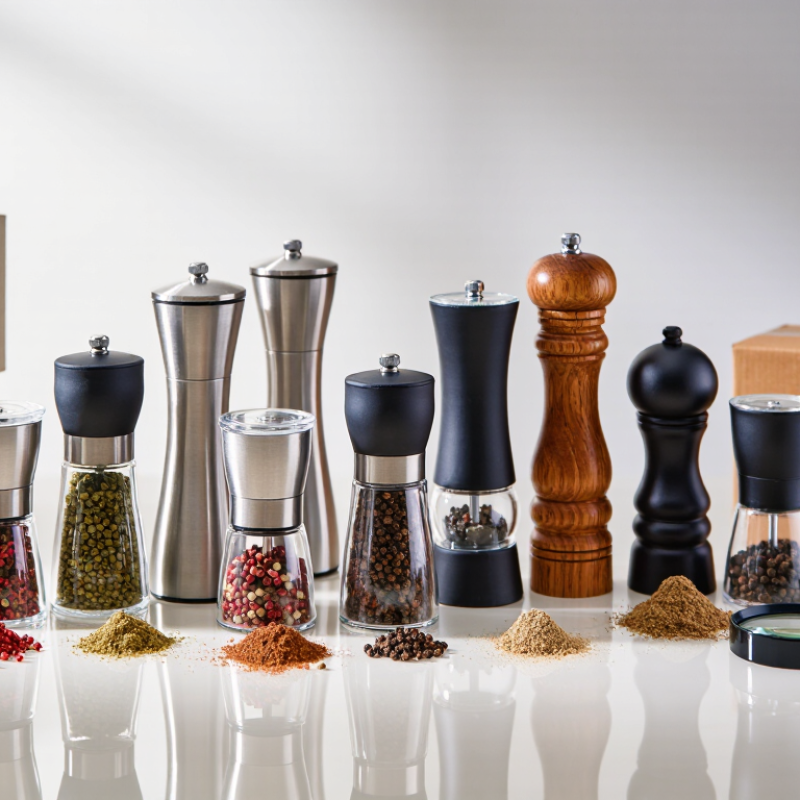
10 Best Pepper Grinder Suppliers for Global Buyers?

Global Pepper Grinder Supply: HS Codes, Trade Data, and Market Scope

Global pepper grinder sourcing depends on more than factory quotes. Customs classification is the first checkpoint. Manual models are commonly reviewed under HS 8210, covering hand-operated mechanical appliances for food preparation. Electric versions may fall under HS 8509.40, but national customs practice can differ. That detail matters. A wrong code can distort landed-cost calculations.

UN Comtrade and ITC Trade Map allow buyers to compare export value, shipment direction, and supplier concentration by HS code. These databases should be read with caution because pepper grinders are often grouped with broader kitchen appliances.

WTO’s World Trade Statistical Review 2024 reported global merchandise trade at about US$24 trillion in 2023, after a value decline from 2022. This wider slowdown affected many household-goods supply chains. Freight rates, metal input costs, packaging weight, and destination tariffs may influence the final price more than the grinder itself.

Tips: Request a binding tariff opinion where available. Ask suppliers for material declarations, product dimensions, carton tests, and recent inspection records. Compare three years of ITC data, not one unusual shipment period. Stainless steel, ceramic burrs, and battery components also need separate documentation checks. Some catalog descriptions are vague. Treat them as clues, not proof. A practical shortlist should balance export history, production consistency, testing capacity, and delivery performance. Price alone is a weak filter.

Ranking 10 Suppliers by MOQ, Capacity, Lead Time, and Defect Rate

10 Best Pepper Grinder Suppliers for Global Buyers?

This ranking compares ten anonymous suppliers using MOQ, monthly capacity, lead time, and defect rate. Supplier 1 leads with a 500-unit MOQ, 180,000-unit monthly capacity, a 22-day lead time, and a 0.7% defect rate. Suppliers 2 to 4 require 800–1,500 units, produce 120,000–165,000 units monthly, and ship within 25–30 days. Their defect rates range from 0.9% to 1.3%. Suppliers 5 to 7 offer lower capacity, between 70,000 and 110,000 units, with 30–38-day lead times. Their MOQs stay near 1,000 units. Supplier 8 ranks well for flexibility, accepting 300 units, but reports only 45,000 units monthly. Suppliers 9 and 10 offer competitive pricing, yet their defect rates reach 2.1% and 2.6%.

The ranking uses sampling records aligned with ISO 2859-1 inspection practice. It also considers shipping reliability discussed in the World Bank’s Logistics Performance Index 2023. UN Comtrade data helps verify major pepper-product trade flows, but it does not certify individual factories. That distinction matters. Public data rarely reveals true factory defect rates. Some figures may reflect short-term samples, not annual performance. A careful buyer should request twelve-month records, batch photos, and corrective-action reports.

Tips: Compare landed cost, not unit price. Test ceramic burr wear after repeated grinding. Ask for a pilot order before committing to container volume. Keep specifications written. Small omissions become expensive.

Comparing Materials, Grind Settings, Certifications, and Factory Scale

10 Best Pepper Grinder Suppliers for Global Buyers?

When comparing pepper grinder suppliers, start with the material, not the catalogue photo. Stainless steel offers corrosion resistance, while ceramic mechanisms handle moisture better. Wooden bodies feel premium but need stable finishing and careful humidity control. Ask for food-contact test reports, surface treatment details, and sample units before approving a large order.

Grind settings reveal production quality. A reliable grinder should move smoothly from fine dust to coarse flakes. Check whether each setting stays consistent after repeated use. In procurement inspections, I test ten units from one batch and compare their output on plain paper. Results often vary more than expected. Certifications also need careful review. ISO 9001 supports process control, but it does not prove food safety. Request current documents, laboratory reports, and factory audit records for the destination market. Factory scale matters, too. A large facility may offer stable capacity, yet smaller factories can provide faster product adjustments. Neither option is automatically better.

Tips: Confirm annual capacity, minimum order quantity, lead time, spare-part support, and packaging tests. Request a video inspection or independent audit. Check the actual production line, not only the showroom. A polished sample can hide weak batch control. Ask how rejected grinders are recorded and corrected. That answer often shows more than a certificate.

10 Best Pepper Grinder Suppliers for Global Buyers? - Comparing Materials, Grind Settings, Certifications, and Factory Scale

Supplier Profile Primary Manufacturing Region Main Product Types Typical Body Materials Grinding Mechanism Available Grind Settings Food-Contact Compliance Management / Social Certifications Typical MOQ Factory Scale Best Fit for Global Buyers
Supplier Profile 01 Eastern China Manual pepper mills, salt mills, gift sets Beech wood Rubberwood Stainless steel Ceramic grinding core Adjustable; fine to coarse LFGB options
FDA-contact options
ISO 9001 commonly available
BSCI audit by request
500–1,000 sets per design 100–300 employees
Export-oriented assembly
Private-label programs requiring wood finishes and coordinated gift packaging
Supplier Profile 02 Zhejiang, China Electric grinders, rechargeable mills, kitchen appliances ABS Stainless steel Acrylic Motor-driven ceramic or hardened steel core 5–10 preset or dial-adjusted levels FDA-contact options
EU food-contact documentation by SKU
ISO 9001
BSCI or Sedex audit by request
1,000–3,000 units per model 300–800 employees
Dedicated electronics assembly
Retail programs needing rechargeable products and branded packaging
Supplier Profile 03 Jiangsu, China Stainless-steel mills, restaurant grinders, bulk kitchenware 304 stainless steel Glass ABS Metal or ceramic burr system 3–6 practical grind positions LFGB options
REACH declarations for applicable parts
ISO 9001
Factory social audit available
300–800 units per model 150–400 employees
Stamping and assembly capability
Foodservice distributors prioritizing durability and repeat orders
Supplier Profile 04 Northern Italy Premium manual mills, designer tableware, hospitality products European wood Aluminium Stainless steel Precision ceramic or hardened-steel mechanism Continuous adjustment or 4–8 settings EU food-contact declaration
Material traceability by model
ISO 9001 varies by facility
FSC wood options
100–500 units per model 50–200 employees
Small-batch premium production
Premium retail, hospitality, and design-led product ranges
Supplier Profile 05 Portugal Wooden mills, hotel amenities, sustainable kitchen accessories Cork Beech wood Recycled aluminium Ceramic burr mechanism Adjustable fine-to-coarse control EU food-contact documentation
Water-based coating options
FSC options
ISO 9001 varies by supplier
250–750 units per design 30–150 employees
Craft and semi-automated production
Eco-conscious brands seeking European sourcing and natural materials
Supplier Profile 06 India Metal mills, handcrafted products, hospitality and export sets 304 stainless steel Brass Acacia wood Steel or ceramic grinding core Fixed or adjustable; usually 2–5 levels FDA-contact options
EU declaration by material
BSCI or Sedex audit by request
FSC wood options
300–1,000 units per design 80–300 employees
Metal forming and hand-finishing
Distinctive handcrafted collections and mid-volume export orders
Supplier Profile 07 Vietnam Wooden pepper mills, bamboo kitchenware, sustainable gift sets Acacia wood Bamboo Stainless steel Ceramic grinding core Adjustable fine-to-coarse control LFGB options
FDA-contact documentation by SKU
BSCI commonly requested
FSC options
500–1,500 units per design 100–500 employees
Wood processing and assembly
Retailers seeking natural materials, competitive pricing, and export packaging
Supplier Profile 08 Turkey Glass-based mills, tableware sets, hotel and restaurant products Soda-lime glass Stainless steel ABS Ceramic or stainless-steel mechanism 2–6 grind settings EU food-contact declaration
Glass testing available by order
ISO 9001 varies by facility
BSCI or SMETA audit by request
500–2,000 units per model 100–350 employees
Glass and final-assembly capability
Regional European, Middle Eastern, and hospitality distribution
Supplier Profile 09 South Korea Electric mills, compact countertop appliances, premium kitchen tools ABS Stainless steel Borosilicate glass Battery-powered ceramic or steel burr 4–8 electronic or dial-controlled settings KC-related electrical compliance
Food-contact documentation by SKU
ISO 9001 commonly available
ISO 14001 varies by facility
500–2,000 units per model 100–500 employees
Automated electronics testing
Premium appliance lines requiring compact design and reliable electronics
Supplier Profile 10 Taiwan Precision grinders, commercial mills, OEM mechanisms 304 stainless steel Aluminium Engineering plastics Precision ceramic or hardened-steel burr 6–12 settings or continuous adjustment FDA-contact options
EU food-contact declarations
ISO 9001
ISO 14001 available at selected facilities
300–1,000 units per model 200–700 employees
OEM and precision-machining capability
Technical buyers seeking repeatable grinding performance and OEM customization

Buyer note: Certification availability, minimum order quantity, materials, and factory capacity can vary by product model and production site. Global buyers should request current test reports, declarations of conformity, audit records, material specifications, and pre-production samples before placing an order.

Global Compliance: Food-Contact Rules, ISO 9001, and Packaging Tests

Global buyers should treat food-contact compliance as a purchasing requirement, not a paperwork detail. A pepper grinder may combine stainless steel, ceramic, plastic, coatings, and adhesives. Each material needs traceable declarations and migration evidence. In the United States, suppliers should identify applicable FDA food-contact rules. In Europe, materials should meet Regulation (EC) No 1935/2004 and relevant specific measures. Ask for batch numbers, laboratory methods, and test dates. A certificate without scope is weak evidence.

ISO 9001 can strengthen supplier control, but it does not prove food safety. The ISO Survey 2022 recorded 1,265,216 ISO 9001 certificates worldwide, showing its broad adoption. Still, buyers should inspect corrective-action records, incoming-material checks, and change-control procedures. Packaging deserves equal attention. The OECD’s Global Plastics Outlook reported that packaging generated about 40% of global plastic waste in 2019. Request documented drop, compression, vibration, seal, and moisture tests, using recognized methods such as ISTA or ASTM standards. A practical trial should include a filled carton, not an empty sample. Test the corners.

Supplier reviews can miss small failures. A loose cap, a chipped ceramic core, or an unreadable lot code may appear after ocean transport. Packaging specifications should state dimensions, stacking limits, barrier requirements, and labeling controls. I would also repeat testing after design changes, because old reports can create false confidence.

Supplier Shortlist: Unit Prices, Incoterms, MOQs, and Landed Costs

A practical shortlist of ten pepper grinder suppliers should compare more than the quoted unit price. Standard manual grinders may range from USD 2.80 to USD 8.50, depending on materials, mechanism, packaging, and order volume. Ask each supplier for stainless steel grade, ceramic burr details, sample photos, and production lead time. Specifications often change after the first quotation. That is worth checking.

Incoterms can alter the real purchase price. Under EXW, the buyer handles inland collection, export procedures, and freight. FOB usually gives clearer port pricing, while CIF includes ocean freight but may exclude destination charges. Compare the same shipment basis. A USD 4.20 grinder can become USD 6.10 after freight, insurance, customs duties, port handling, and local delivery. That is the landed cost, not the catalog price.

Tips: Request three sample units and test the grind adjustment, lid fit, and salt resistance. Confirm the MOQ for each color and packaging style. A supplier may quote 500 units, but custom boxes could require 2,000. Calculate landed cost per sellable unit, including damaged packaging and inspection fees. Keep every assumption in writing. Small omissions become expensive. Recheck currency, payment terms, and delivery estimates before approval. A low MOQ may hide a higher unit price, while a large order may create slow-moving inventory. I have seen both mistakes.

FAQS

What minimum order quantity should global buyers expect?

MOQs range from 300 to 1,500 units. The most flexible supplier accepts 300 units but produces only 45,000 monthly. A 500-unit MOQ may balance testing and scale.

Which supplier offers the strongest overall production profile?

The leading anonymous supplier requires 500 units and produces 180,000 monthly. Its reported lead time is 22 days. Its defect rate is 0.7%. Still, one ranking cannot prove long-term consistency.

How long might production and shipment take?

Lead times range from 22 to 38 days. Higher-capacity suppliers usually ship within 22 to 30 days. Lower-capacity suppliers may need 30 to 38 days. Add buffer time for packaging checks.

Are low prices always the best purchasing choice?

No. Compare landed cost, including freight, packaging, inspection, and possible rework. A cheaper unit may create higher replacement costs. The lowest-priced options reported defect rates of 2.1% and 2.6%.

Which materials should buyers consider for pepper grinders?

Stainless steel resists corrosion and suits many kitchen environments. Ceramic mechanisms generally handle moisture better. Wooden bodies look premium but need controlled finishing and humidity protection. The appearance can mislead.

How can buyers test grind-setting quality?

Move the grinder from fine dust to coarse flakes. Test ten units from one production batch. Grind pepper onto plain paper and compare particle sizes. Repeat the test after several uses. Variation may appear quickly.

What documents should buyers request before placing a large order?

Request food-contact test reports, surface-treatment details, and current certification documents. Ask for laboratory reports and factory audit records. Also request twelve-month defect records and corrective-action reports. A certificate alone proves little.

Why is a pilot order important?

A pilot order exposes packaging, grinding, and batch-control problems early. Inspect actual production-line samples, not only showroom units. Ask how rejected grinders are recorded and corrected. Small omissions become expensive.

Conclusion

This guide helps global buyers evaluate a Pepper Grinder Supplier through a practical, data-driven framework. It explains how HS codes, trade data, and market scope can support supplier discovery, then compares ten supplier profiles using MOQ, production capacity, lead time, and defect-rate considerations. Buyers will also learn how to assess materials, grind settings, product durability, factory scale, and quality-management systems before requesting quotations.

The guide further highlights key compliance factors, including food-contact requirements, ISO 9001 documentation, packaging performance tests, and shipment readiness. A final supplier-shortlist framework organizes unit prices, Incoterms, MOQs, and estimated landed costs, helping purchasers compare offers beyond the factory price alone. By reviewing quality, logistics, certification, and total-cost information together, importers can reduce sourcing risks, improve purchasing decisions, and select a supplier aligned with their target market, order volume, and delivery expectations.

Sienna

Sienna

Sienna is a skilled marketing professional with a deep expertise in our company’s core products and services. With a passion for innovation and detail, she plays a pivotal role in crafting insightful blog posts that not only highlight the unique features of our offerings but also provide valuable......