
10 Best Metal Olive Oil Dispensers for 2026

Time:2026-11-02 Author:Amelia
0%

A Metal Olive Oil Dispenser can make everyday cooking neater, but its value is not just appearance. Olive oil meets air and light each time a bottle is opened. An opaque metal body helps limit light exposure, while a controlled spout can reduce drips beside the stove. Small details matter.

The International Olive Council estimated global olive oil production at about 3.38 million tonnes for the 2024/25 crop year. That scale makes storage quality a practical concern for home cooks and producers alike. UC Davis Olive Center guidance also highlights light, heat, and oxygen as key factors in oil storage. Olive oil researcher Dr. Selina Wang has expressed the advice simply: “Protect olive oil from light, heat, and oxygen.” A well-designed dispenser supports that goal, but cannot restore oil that is already stale.

Our 10 Best Metal Olive Oil Dispensers for 2026 focuses on useful differences: food-contact materials, a steady pour, easy cleaning, and a cap that fits securely. Some models look polished on a countertop but leave oil around the spout. Others feel plain, yet pour cleanly. That trade-off deserves attention. Check whether the product specifies stainless steel or another food-safe metal, and whether the pouring parts can be cleaned thoroughly. A metal finish alone proves little. These picks aim to help readers compare real kitchen performance, not just shine.
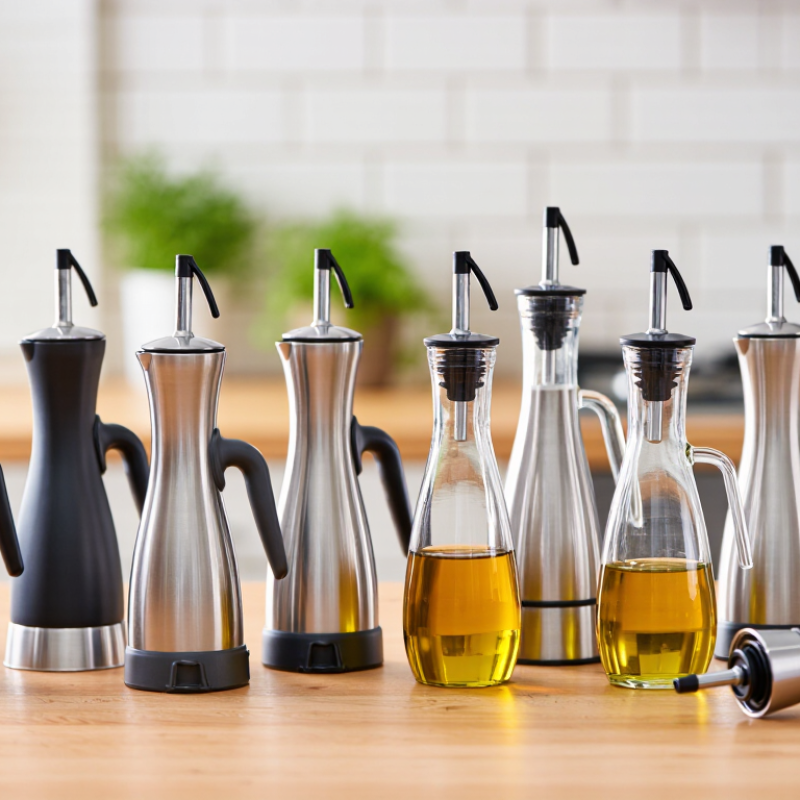
10 Best Metal Olive Oil Dispensers for 2026

How Metal Olive Oil Dispensers Are Evaluated for 2026

For this 2026 selection, metal olive oil dispensers are judged by more than appearance. The oil-contact surface should be clearly identified as food-safe stainless steel or another suitable material. A dark or opaque body can limit light exposure, while a secure lid helps reduce contact with air. These features matter most when a bottle sits beside a sunny kitchen window or near a warm stove. Not every product explains its materials well, and that uncertainty counts against it.

Pouring performance is checked through practical details: a steady stream, a controlled opening, and minimal oil left running down the spout. A narrow pour can help dress a salad without flooding it. A broad, stable base matters when hands are wet or the counter is crowded. Capacity, refill access, and ease of cleaning also affect everyday use. Small details count. A removable spout may simplify washing, but extra parts can be easy to misplace. Ratings weigh these trade-offs alongside construction quality, leak resistance, and clear care instructions, rather than treating a polished finish as proof of durability.

Materials, Capacity, Pouring Control, and Light Protection

A metal olive oil dispenser should feel stable in your hand, not merely look polished on the counter. Stainless steel resists dents and is easy to wipe clean, while coated metals may scratch if handled roughly. Check the interior material and seams, since oil can cling around narrow openings. For everyday cooking, a capacity of 16 to 24 ounces is usually manageable. Larger bottles mean fewer refills, but they can feel awkward when nearly full.

Pouring control matters most when you dress a salad or drizzle oil into a hot pan. A narrow spout can help produce a steady stream, though it may clog if oil residue dries inside. Look for a removable spout or one that is easy to rinse. Metal blocks light, which helps limit light exposure, but it does not prevent heat or air from affecting oil. Keep the dispenser away from the stove and close it between uses. Small habits make a difference. I still find that even a well-designed spout can drip occasionally.

Tips: Choose a bottle that is easy to lift with wet hands. Refill it in small batches, and wash the spout regularly. If the cap does not seal firmly, use a separate storage bottle for longer-term keeping.

10 Best Metal Olive Oil Dispensers for 2026 - Materials, Capacity, Pouring Control, and Light Protection

A brand-free comparison of common metal dispenser formats. Capacities are typical sizes; check individual product specifications before purchasing.

Rank Dispenser Type Typical Capacity Materials Pouring Control Light Protection Best For Care Consideration
1 Stainless Steel Cruet with Narrow Spout 500 ml Stainless steel body; metal or food-grade polymer spout components Narrow spout supports a steady, relatively controlled stream High: an opaque metal body blocks light from reaching the oil Everyday countertop pouring Check whether the spout can be removed for thorough cleaning
2 Stainless Steel Dispenser with Flip-Top Pourer 500–750 ml Stainless steel body; hinged metal or polymer cap Flip-top opens for pouring and closes between uses High when the body is fully opaque; the cap may not form an airtight seal Frequent kitchen use with a covered spout Clean the cap and hinge regularly to prevent oil buildup
3 Stainless Steel Oil Can with Side Handle 750 ml–1 L Stainless steel body and handle; fitted pouring spout Handle helps steady the vessel; flow depends on spout width and tilt High: opaque steel shields the contents from light Cooking tasks that need repeated, measured pours Choose a wide opening if you plan to refill it by hand
4 Compact Stainless Steel Table Cruet 250–350 ml Stainless steel body; simple pour spout Small capacity makes it easier to handle; spout design determines flow High with a fully opaque body Dining tables and small kitchens Smaller volumes need more frequent refilling
5 Large Stainless Steel Refill Dispenser 1–1.5 L Stainless steel body; screw, lift-off, or fitted lid Usually suited to decanting or cooking; a large spout may pour quickly High if the body is opaque and the lid covers the opening High-use kitchens and bulk storage for regular use Keep away from heat and refill only with fresh, clean oil
6 Stainless Steel Dispenser with Removable Spout 500–750 ml Stainless steel body; detachable metal or food-grade polymer pourer Spout can be selected or replaced to suit the desired stream High when the body is opaque; the spout assembly may admit air Users who prioritize easy spout cleaning Confirm that the spout fits securely and is compatible with food contact
7 Metal Oil Can with Long Narrow Spout 500 ml–1 L Opaque metal container, commonly stainless steel or coated metal Long, narrow spout can direct oil accurately; flow still varies with tilt High when the can is fully opaque Drizzling into pans or over prepared food Inspect the coating and seams; avoid using a can with damaged interior surfaces
8 Stainless Steel Dispenser with Drip-Return Collar 500 ml Stainless steel body; shaped metal collar around the spout Standard spout provides the control; collar helps catch residual drips High with an opaque body Keeping a counter or serving area tidier Wipe the collar after use, as oil can collect around the spout base
9 Brushed Stainless Steel Countertop Cruet 500–750 ml Brushed stainless steel body; fitted pouring spout Typical spout offers a controlled stream; it is not a calibrated measure High: the opaque finish blocks light Countertops where a durable, understated finish is preferred Use a soft cloth to reduce visible scratches on the brushed surface
10 Metal-Sleeved Dispenser with Glass Insert 250–500 ml Metal outer sleeve or frame with a removable glass inner bottle Depends on the fitted pourer; a removable insert simplifies refilling Partial: uncovered glass areas still allow light to reach the oil Users who want to see the oil level while retaining a metal exterior Check that the glass insert is removable and protected from knocks

Ten Metal Olive Oil Dispensers Worth Considering in 2026

A thoughtful 2026 shortlist should compare handling, food-contact materials, and cleanup, not shine alone. Consider a brushed-steel bottle, a slim stainless-steel dispenser, and a compact countertop canister. A glass-lined metal body keeps oil away from light while making the fill level visible. Other options include a double-wall design, a wide-mouth refill opening, and a narrow-neck pourer. Small details matter.

For controlled pouring, compare a hinged cap, a removable spout, and a measured-flow insert. Together, these make ten useful configurations for different kitchen routines. Check whether oil touches stainless steel, glass, or an unclear coating. A metal exterior does not guarantee a suitable interior. Look for a stable base, a drip-resistant spout, and parts that separate for washing. Easy to miss.

Capacity matters too: a larger vessel needs fewer refills, but oil may sit longer near heat. Keep the dispenser away from the stove, and consider an opaque body for a bright counter. A heavy bottle feels reassuring, yet can be awkward with wet hands. I would not treat mirror polish as a meaningful advantage; fingerprints return quickly. There is no perfect pick. Choose one that pours cleanly, refills easily, and does not make washing a chore.

How to Choose a Dispenser for Your Kitchen and Cooking Habits

Choosing a metal olive oil dispenser starts with how you cook, not how it looks on the counter. If you drizzle oil over salads or finish roasted vegetables, choose a narrow spout that pours slowly and cleanly. For frequent sautéing, a wider opening may be easier to refill. A controlled pour matters. Oil running down the bottle can leave a slippery patch beside the stove.

Think about capacity and placement. A compact dispenser suits a small kitchen or occasional use; a larger one means fewer refills but can feel heavy when full. Stainless steel blocks light, which helps limit exposure, but check that the interior and any parts touching oil are suitable for food contact. Keep the bottle away from heat, even if it looks sturdy. The stove-side spot is convenient, but it is not always the best one.

Cleaning can be the detail people overlook. Look for a removable spout and an opening wide enough for a brush or easy rinsing. Some designs pour beautifully but are frustrating to refill. That trade-off is real. If you use several oils, clear labels help prevent a quick reach from becoming the wrong choice. A dispenser should match your routine, though it may take a week of cooking to notice what feels awkward.

Cleaning and Storing a Metal Olive Oil Dispenser

A metal olive oil dispenser stays pleasant to use when oil residue does not linger around its spout. Empty it before cleaning, then wash the body with warm water and mild dish soap. Use a soft cloth, not a rough scouring pad that could scratch the finish. A narrow bottle brush can reach the base, though it may not fit every shape. Check the maker’s care instructions, especially if the dispenser has a coated surface or mixed materials. Rinse well.

Drying matters. Water trapped inside can affect fresh oil, and damp threads may leave the cap sticky. Let the bottle drain upside down on a clean rack, then finish with a lint-free towel. Clean removable spouts separately, paying attention to small openings where oil thickens. They are easy to miss. If a film remains, repeat the wash rather than pouring new oil over it.

Store the dispenser in a cool, dark cupboard, away from the stove and sunny windows. Heat and light can dull olive oil’s flavor over time. Keep the cap closed, and avoid topping up fresh oil over an old layer; residue can turn stale. I would not assume every metal bottle is dishwasher-safe. That shortcut can damage finishes or leave water in hidden seams. If oil clouds after chilling, it often clears at room temperature, but a cupboard is usually more practical.

10 Best Metal Olive Oil Dispensers for 2026: Cleaning and Storage

Olive Oil Fatty Acid Profile

Generic olive oil contains mostly monounsaturated fatty acids. To help preserve its quality, store it away from heat and light, and keep your dispenser clean and completely dry before refilling. A food-safe metal dispenser can help shield the oil from light.

Approximate fatty acid values per 100 g, based on USDA FoodData Central data for olive oil.

FAQS

What capacity works well for everyday cooking?

A 16- to 24-ounce dispenser is usually manageable. Larger bottles need fewer refills but feel heavier when full.

Does a metal dispenser protect olive oil from light?

Metal blocks light, which can limit exposure. It does not protect oil from heat or air.

Where should I keep the dispenser?

Keep it away from the stove, even if that spot seems convenient. Close it between uses.

What spout is best for salads and drizzling?

A narrow spout can provide a slow, steady pour. It may clog if dried oil remains inside.

How can I reduce drips and oily messes?

Choose a removable spout that rinses easily. Wipe the bottle after pouring. Drips still happen sometimes.

What should I check about the inside of a metal dispenser?

Check which material touches the oil, including any coating and seams. A metal exterior alone does not tell you.

How can I make cleaning easier?

Look for a wide refill opening and parts that separate for washing. A small brush can help with narrow spaces.

Is a heavier dispenser better?

It may feel stable on the counter, but can be awkward with wet hands. I might still choose one by appearance, then regret the grip.

Should I use one dispenser for several oils?

Clear labels can prevent mix-ups during quick cooking. Keep the bottle easy to lift and refill.

How can I store oil for longer periods?

If the cap does not seal firmly, use a separate storage bottle. Refill the dispenser in small batches.

Conclusion

This guide explains how metal olive oil dispensers can be assessed for 2026, focusing on practical features that matter in everyday kitchens. It considers the dispenser’s material and construction, capacity, pouring control, and ability to limit light exposure, then introduces ten options worth considering. Rather than treating one design as right for everyone, the guide highlights how these features can affect handling, storage, and use while cooking.

Choosing a Metal Olive Oil Dispenser is easier when you consider your cooking habits, available counter or cupboard space, and how much oil you typically use. The guide also covers care: cleaning the dispenser and its components regularly, drying them thoroughly, and storing the oil away from heat and direct light. Together, these points offer a straightforward framework for selecting and maintaining a dispenser that suits your kitchen.

Amelia

Amelia

Amelia is a seasoned marketing professional with a wealth of expertise in our company’s core offerings. With an unwavering passion for driving growth and innovation, she plays a pivotal role in shaping our marketing strategies and enhancing brand visibility. A key aspect of her responsibilities......